Leave Your Message

2026 Best Surge Arrester Types for Global Buyers?

Choosing the best Surge Arrester in 2026 requires more than comparing prices or catalog ratings. Global buyers must match the arrester to system voltage, temporary overvoltage, insulation levels, grounding design, and local weather conditions. Metal-oxide arresters remain widely used because they respond quickly and require no series gaps. Distribution, intermediate, and station-class designs serve different networks. Polymer-housed models can reduce weight and improve handling, especially on crowded poles or substations.

Field experience shows that small details often decide long-term performance. A coastal site may demand stronger pollution resistance. A high-altitude project needs careful insulation coordination. In a dusty industrial yard, sealing quality matters. Buyers should review maximum continuous operating voltage, rated discharge current, energy capability, creepage distance, and pressure-relief behavior. IEC 60099-4 and relevant IEEE guidance can support technical evaluation, but compliance marks alone cannot prove suitability for every grid.

There is no universal best choice.

Reliable suppliers should provide routine test records, type-test evidence, installation instructions, traceable materials, and practical warranty terms. Independent laboratory reports also deserve close review. Some specifications look impressive on paper but lack clear test conditions. That weakness should not be ignored. This guide examines leading Surge Arrester types for global buyers in 2026, while recognizing that budgets, standards, climates, and maintenance skills differ. A careful decision balances tested protection, lifecycle cost, installation access, and the consequences of failure.
2026 Best Surge Arrester Types for Global Buyers?

What Is a Surge Arrester and How Does It Work?

2026 Best Surge Arrester Types for Global Buyers?

What Is a Surge Arrester and How Does It Work?

A surge arrester protects electrical equipment from short, high-voltage impulses. Lightning and switching operations can create these sudden surges. The arrester redirects excess energy toward earth before it reaches sensitive equipment. Under normal voltage, its internal resistance remains high. During a surge, that resistance drops sharply. The device then conducts briefly and limits the voltage at the equipment terminals.

Metal-oxide arresters are widely used in distribution and industrial systems. They respond quickly and usually have no series gaps. Gap-type arresters can provide strong isolation during normal operation. Hybrid designs combine different protective methods for demanding installations. The correct type depends on system voltage, grounding, impulse energy, altitude, and pollution level. A common mistake is choosing only by nominal voltage. Maximum continuous operating voltage also matters. Protection can fail when temporary overvoltage lasts too long.

Tips: Check the arrester’s MCOV, discharge-current rating, energy capability, and enclosure class. Match the grounding arrangement and local installation rules. Keep connections short and straight. Long leads add inductance and reduce protection. Inspect bonding, cable length, and earth resistance during commissioning. Standards such as IEC 60099-4 can support technical comparison, but local requirements still control the final selection. One practical lesson is uncomfortable: even a high-rated arrester cannot compensate for poor grounding or incorrect coordination. Product data should be reviewed by a qualified electrical professional.
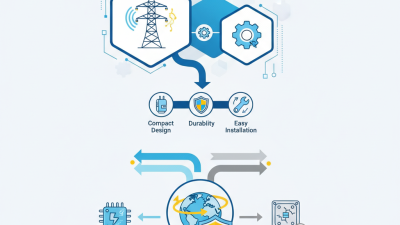
Main Surge Arrester Types for Different Protection Needs

For global buyers, surge arrester selection starts with the protection point, not the product label. NASA’s LIS/OTD climatology estimates about 44 lightning flashes worldwide every second. NOAA also identifies lightning as a major transient threat to electrical networks. That choice matters.

Distribution-class metal-oxide arresters suit medium-voltage feeders, transformers, and compact substations. They provide practical protection where equipment insulation levels and budgets are moderate. Station-class arresters handle higher energy and stricter residual-voltage requirements near large transformers, generators, and transmission equipment. IEC 60099-4 defines key performance tests, including discharge current, residual voltage, and thermal stability. Ask for certified test results.

Line arresters are useful on exposed overhead lines, especially where shielding is limited or lightning density is high. They can reduce flashover risk on selected poles, but installation quality remains critical. Low-voltage Type 1, Type 2, and Type 3 SPDs protect service entrances, distribution boards, and sensitive electronics. IEC 61643-11 separates these applications by test duty and installation position. Do not treat them as interchangeable.

In practice, engineers should check maximum continuous operating voltage, temporary overvoltage, grounding resistance, pollution, altitude, and expected energy duty. CIGRE guidance stresses coordination between insulation levels and arrester characteristics. I would not choose by voltage alone. That is a common mistake. A smaller arrester may fit physically yet fail during repeated surges. A higher-rated unit may protect poorly if its residual voltage exceeds the equipment’s insulation capability. Uncertainty remains, particularly when grid data is incomplete.

How Voltage, Current, and Energy Ratings Affect Selection

2026 Best Surge Arrester Types for Global Buyers?

Selecting a surge arrester starts with voltage, not marketing claims. IEC 61643-11 defines maximum continuous operating voltage, or Uc, and protection level, or Up. Uc must exceed the system’s highest sustained voltage. Up must remain below sensitive equipment’s impulse withstand level. A 230 V system may need different protection from a 277 V system, even when both use similar cabinets. IEEE C62.41.2 also separates surge environments by installation location. Service entrances face stronger exposure than downstream distribution panels.

Current ratings describe survival during a surge. Nominal discharge current, In, commonly uses an 8/20 microsecond waveform. Maximum discharge current, Imax, indicates a more severe test condition. NOAA’s National Severe Storms Laboratory reports lightning can carry roughly 30,000 amperes, but an arrester does not need to match that entire figure. Wiring, grounding, and installation geometry change the actual stress. Energy ratings, often shown in joules, can help compare products, yet joules alone can mislead. A device with a large number may still clamp poorly if its Up is too high. IEEE guidance repeatedly emphasizes coordinated protection across locations.

In practical purchasing, verify earthing resistance, conductor length, backup protection, and replacement indicators. I have seen specifications copied across regions without checking local voltage tolerances. That is risky. Ratings are not perfectly interchangeable. Some datasheets also explain test conditions poorly, leaving buyers to guess. Require waveform details, certification scope, and tested residual voltage before approval. Small omissions become expensive after one severe event.

2026 Best Surge Arrester Types for Global Buyers

How voltage, current, and energy ratings affect selection

Selection guidance: Type 1 devices are tested with the high-energy 10/350 μs impulse current used for service-entrance and lightning-current applications. Type 2 devices use the 8/20 μs nominal discharge-current test for distribution boards. Type 3 devices are tested closer to sensitive equipment with a 1.2/50 μs voltage impulse and an 8/20 μs short-circuit current.

The chart shows standardized reference test levels, not universal product nameplate ratings. Actual voltage protection level Up, discharge current, and energy capability vary by design. Select an SPD with an Up value below the equipment withstand level, sufficient current capability for the installation exposure, and coordination with upstream and downstream protection.

Where Each Arrester Type Fits in Global Electrical Systems

2026 Best Surge Arrester Types for Global Buyers?

Where Each Arrester Type Fits in Global Electrical Systems

Choosing an arrester starts with the system, not the catalog. Station-class metal-oxide arresters suit substations, transformers, and high-voltage networks. They manage high energy during switching surges and lightning events. IEC 60099-4 defines performance tests for these applications. Distribution arresters fit pole-mounted transformers and medium-voltage feeders. Their compact design supports crowded lines and cost-sensitive grids. Line arresters help exposed transmission conductors where shielding remains incomplete. NASA Earth Observatory estimates roughly 44 lightning flashes occur worldwide each second. That risk changes sharply between coastal, tropical, desert, and mountainous regions.

Low-voltage surge protective devices belong inside buildings, control cabinets, and sensitive equipment panels. IEC 61643-11 separates these devices by testing and installation conditions. Type 1 devices handle partial lightning current at service entrances. Type 2 devices protect downstream distribution boards. Type 3 devices sit near delicate loads. IEEE C62.11 also guides metal-oxide arrester testing. Still, a neat classification can mislead. I would not specify protection from voltage alone. Short-circuit rating, temporary overvoltage, grounding, altitude, pollution, and insulation coordination matter. Field inspection often reveals the missing detail: a long grounding lead or poor bonding path.

Tips: Match the arrester’s continuous operating voltage to the actual system. Check energy duty, not only nominal voltage. Review local lightning density and utility practices. Request tested data, installation clearances, and replacement procedures. A cheaper arrester can become expensive after repeated failures.

How to Choose Certified Arresters for 2026 Projects

For 2026 projects, selecting a certified surge arrester starts with the system, not the catalog. Confirm the network’s maximum continuous operating voltage, temporary overvoltage, short-circuit level, and lightning exposure. The arrester’s rated voltage and residual voltage must match these conditions. A cheaper unit can fail early when pollution, altitude, or repeated switching surges are ignored.

Look for evidence based on IEC 60099-4 or the standard required by the project authority. Request valid type-test reports, routine-test records, and a certificate showing the exact model range. Check whether the tested configuration matches the supplied arrester, including housing material, disconnectors, and grading components. Certification is not a decoration.

Review the manufacturer’s quality system, traceability, and declared production tests. Ask for serial-number records and inspection procedures. In outdoor substations, examine creepage distance, sealing, ultraviolet resistance, and pressure-relief behavior. Coastal air and industrial dust can change the selection. Small details matter.

A project engineer should also compare the arrester’s energy capability with transformer insulation levels and expected surge frequency. Do not rely only on nominal discharge current. It can be misleading. During procurement, request independent laboratory evidence and local grid approval where applicable. Certificates may expire, exclude certain voltages, or cover only a test sample. That detail is easy to miss.

Field experience suggests one uncomfortable truth: technical documents are often reviewed too late. A clear compliance matrix, checked before ordering, prevents expensive redesigns. Leave room for doubt. A certified arrester may still be unsuitable for the installation.