China Best General Purpose Fuses Supplier?
Choosing the China Best General Purpose Fuses Supplier requires more than comparing unit prices. A fuse may look small, yet it protects transformers, control panels, motors, and industrial wiring from dangerous overcurrents. Its silver element, ceramic body, and end caps must perform consistently under heat and fault conditions.
Industry data shows why this market deserves careful attention. Fortune Business Insights estimates that the global electrical fuses market reached approximately USD 4.1 billion in 2023 and will continue growing through 2032. Mordor Intelligence also identifies industrial automation, renewable energy, and power distribution as major demand drivers. These trends increase the need for stable General Purpose Fuses, especially in factories with continuous production schedules.
A dependable Chinese supplier should provide traceable raw materials, controlled assembly, and test records for every production batch. Compliance with IEC 60269, UL 248, or applicable regional requirements is an important starting point. However, certificates alone do not prove long-term reliability. Ask for breaking-capacity tests, temperature-rise data, resistance measurements, and samples from current production. Check the details.
In practical evaluation, the best supplier is not always the cheapest factory. A low quotation may hide inconsistent dimensions, weak packaging, or slow technical support. Buyers should examine factory experience, export history, quality systems, customization capability, and response time. Supplier audits and independent laboratory verification can reduce avoidable risks. Still, no selection process is perfect. Application voltage, ambient temperature, installation method, and expected fault current must be reviewed together before approval.
What Are General-Purpose Fuses and How Do They Work?
General-purpose fuses protect electrical circuits from excessive current. They are common in distribution panels, control cabinets, appliances, and industrial equipment. Inside the fuse, a calibrated metal element carries normal current without significant heating. When an overload or short circuit produces too much heat, the element melts and opens the circuit.
The process is fast, but not always immediate. A small overload may take several minutes to operate, while a severe short circuit can clear almost instantly. The fuse body helps contain the arc after the element breaks. Selection depends on rated current, voltage, breaking capacity, and time-current characteristics. A fuse rated only by amperage can still be unsuitable. Direct-current circuits also require careful attention because their arcs behave differently from alternating-current circuits.
During panel maintenance, technicians should inspect loose terminals, darkened fuse clips, and heat-damaged holders. These details often reveal resistance problems before failure occurs. I have seen correctly rated fuses run hot because the connection was poor. It was not the fuse’s fault, but the installation still needed correction. Reliable suppliers should provide traceable test data, clear datasheets, consistent dimensions, and production quality controls. Compliance with relevant electrical standards matters, yet paperwork alone cannot replace practical verification under the actual load. A careful buyer checks operating temperature and available fault current before choosing a general-purpose fuse.
China Best General Purpose Fuses Supplier? - What Are General-Purpose Fuses and How Do They Work?
| Fuse Type |
Typical Voltage Range |
Typical Current Range |
Operating Characteristic |
Common Construction |
Typical Applications |
| Fast-Acting Cartridge Fuse |
250–600 V AC |
0.05–30 A |
Opens quickly during short circuits and rapid overcurrent events |
Metal fuse element enclosed in a glass or ceramic tube |
Electronic equipment, power supplies, measurement devices |
| Time-Delay Cartridge Fuse |
250–600 V AC |
0.1–30 A |
Tolerates short-duration inrush current before opening |
Delayed-action element, often combined with a thermal or mechanical feature |
Motors, transformers, capacitive input circuits, appliances |
| Glass Tube Fuse |
32–250 V AC/DC |
0.05–20 A |
Available in fast-acting and time-delay versions |
Transparent glass body with end caps and an internal fusible element |
Low-voltage electronics, control panels, chargers, audio equipment |
| Ceramic Tube Fuse |
250–1,000 V AC/DC |
0.1–100 A |
Fast or delayed response; ceramic construction supports higher interrupt ratings |
Ceramic body, metal end caps, and sometimes silica-based arc-quenching filler |
Industrial controls, power conversion equipment, distribution circuits |
| Miniature Automotive Blade Fuse |
12–32 V DC |
2–40 A |
Usually fast-acting for low-voltage DC branch circuits |
Stamped metal element enclosed in a color-coded plastic body |
Vehicle lighting, infotainment, accessories, and control modules |
| Plug or Screw-In Fuse |
125–250 V AC |
10–30 A |
Protects individual low-voltage branch circuits against overloads and short circuits |
Threaded insulating body with a replaceable fusible element |
Residential and light-commercial branch-circuit protection |
| High-Voltage General-Purpose Fuse |
1–36 kV AC |
Approx. 1–200 A |
Interrupts fault current in medium-voltage networks; rating depends on the specified application |
Fuse element in an insulating tube, commonly with arc-quenching material |
Transformers, feeders, capacitor banks, and medium-voltage switchgear |
How a Fuse Works
A fuse contains a calibrated element that heats up as current flows. When the current exceeds its time-current limit, the element melts and creates an open circuit.
Key Selection Factors
Check rated voltage, rated current, interrupting rating, time-current characteristic, AC or DC suitability, physical size, and mounting method.
Common Standards
Low-voltage fuse requirements are commonly specified under IEC 60127 or UL 248, while automotive and medium-voltage applications use separate applicable standards.
Note: The voltage and current values shown are typical application ranges rather than universal limits. The exact ratings, interrupting capacity, dimensions, and approval requirements must be verified from the individual fuse datasheet and the applicable electrical standard.
Which Types of General-Purpose Fuses Are Available?
Which Types of General-Purpose Fuses Are Available?
General-purpose fuses cover more than one design. The common options include cylindrical cartridge, blade, plug, bolted, and NH fuses. Most low-voltage distribution applications use gG or gL fuses. They protect cables, lighting circuits, control panels, and small industrial equipment against overloads and short circuits. IEC 60269 defines key requirements for low-voltage fuses, including breaking capacity and temperature performance.
Cylindrical cartridge fuses fit compact holders and support quick replacement. Blade fuses suit vehicles, battery systems, and small control cabinets. Bolted fuses provide stronger mechanical connections under vibration. NH fuses handle higher currents in switchboards and industrial feeders. Size matters. A 10 × 38 mm cartridge fuse cannot replace an NH fuse, even when their current ratings appear similar.
According to a 2024 MarketsandMarkets fuse-market report, the global fuse market was valued at roughly USD 4 billion and continues to grow with electrification. Another industry analysis identifies low-voltage protection as a major demand area. These figures offer useful direction, but they should not replace circuit calculations. In practical selection, engineers check rated voltage, current, time-current curves, breaking capacity, installation category, and ambient temperature. A fuse that survives a brief motor start may still fail during sustained overload. That detail is often underestimated.
What Standards and Ratings Should Buyers Evaluate?
When evaluating a general purpose fuse supplier in China, buyers should begin with applicable standards. IEC 60269 is widely used for low-voltage fuse systems. UL 248 may apply to North American projects. Regional certification must match the installation market. Do not accept a certificate without checking its scope, test voltage, and product family. A credible supplier should provide current test reports, traceable lot numbers, and clear production records.
Ratings require closer attention than the printed ampere value. Confirm rated voltage, current, interrupting capacity, and AC or DC suitability. The fuse must safely clear the expected fault current. Its time-current curve should coordinate with cables, motors, and protective devices. Check ambient temperature, installation method, and continuous loading. Heat changes performance. So does enclosure design. A 100 A fuse is not automatically suitable for a 100 A circuit.
In procurement reviews, buyers often compare price before verifying breaking capacity. That mistake can create expensive redesigns. Ask for temperature-rise data and endurance results, not only catalog pages. Verify whether gG, fast-acting, or other characteristics fit the application. Some documents look professional but omit derating conditions. That deserves questioning. Factory audits, sample testing, and independent laboratory verification add useful confidence. Still, even careful teams can miss a small marking difference. Recheck the label against the approved drawing before shipment.
How to Assess a General-Purpose Fuse Supplier in China?
China Best General Purpose Fuses Supplier?
How to Assess a General-Purpose Fuse Supplier in China?
Choosing a general-purpose fuse supplier requires more than comparing quotations. Check whether the supplier understands voltage, current, breaking capacity, operating temperature, and installation conditions. A capable technical team should explain these details clearly, not simply recommend the cheapest model.
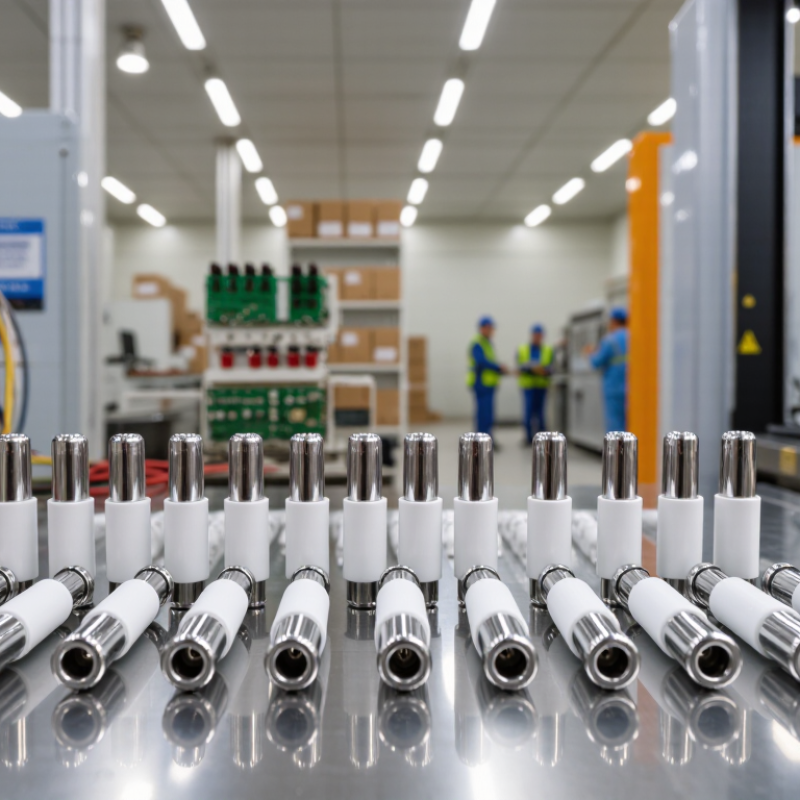
Request datasheets, test reports, material information, and production samples. Verify whether ratings remain consistent between samples and mass production. Look for traceable quality records, calibrated testing equipment, and documented inspection procedures. Factory experience matters. Ask how the supplier controls fuse wire dimensions, ceramic bodies, end caps, and sealing quality.
Small details reveal reliability.
Confirm compliance with the standards required in your target market. Certificates should match the exact product series, not a similar-looking item. You can also arrange an independent inspection before shipment. This step may feel unnecessary, especially for small orders, but one failed batch can create higher costs and delayed projects. Ask about lead times, packaging, replacement procedures, and technical support after delivery.
Price still attracts attention. That is a weakness in many purchasing decisions. A supplier offering a lower price may use different materials or weaker process controls. However, an expensive supplier is not automatically better. Compare evidence, communication speed, sample performance, and corrective-action records. The best choice is usually the supplier that can explain its limitations honestly and improve when testing exposes a problem.
How to Assess a General-Purpose Fuse Supplier in China
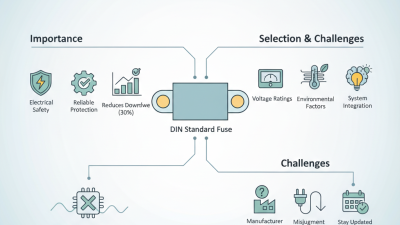
A practical technical screening should verify compliance with recognized fuse requirements before comparing price, capacity, and delivery performance. The chart below summarizes key reference points for low-voltage general-purpose fuse evaluation.
Reference values are based on commonly used international requirements: IEC 60269 covers low-voltage fuses up to 1,000 V AC and 1,500 V DC, while RoHS restricts 10 substances in electrical and electronic products. Actual approval requirements depend on the target market and fuse design.
What Applications Commonly Use China-Sourced General-Purpose Fuses?
China-sourced general-purpose fuses commonly serve industrial control cabinets, commercial distribution boards, HVAC units, lighting circuits, and machinery panels. Under IEC 60269-1, gG fuses protect cables and equipment against overloads and short circuits. Their compact size suits crowded cabinets. Their cost also supports high-volume OEM production.
Renewable energy creates another practical demand. The IEA’s Renewables 2024 report expects global renewable capacity to approach 5,500 GW by 2030. This growth supports fuse use in photovoltaic combiner boxes, inverter auxiliaries, and battery-system control circuits. However, a standard AC fuse cannot automatically protect a DC string. Voltage, breaking capacity, temperature, and time-current curves must match the design.
Electric vehicle supply equipment uses fuses in input protection, control power, and auxiliary circuits. The IEA’s Global EV Outlook 2024 reported nearly 14 million electric car sales in 2023. That figure signals wider charging infrastructure needs. During panel commissioning, a common mistake is checking only the ampere rating. It is not enough. Engineers should verify IEC test evidence, batch traceability, contact resistance, and performance at the actual ambient temperature. A cheaper fuse may pass a basic inspection yet behave poorly after repeated thermal cycling. That risk deserves attention.