How to Choose the Right High Voltage Fuse Links for Your Needs?
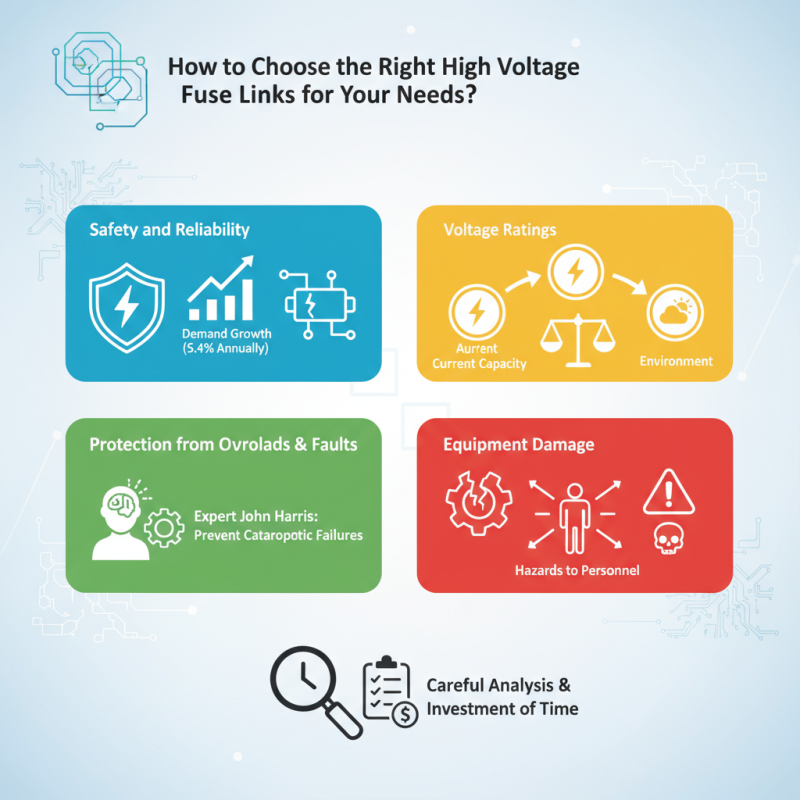
Choosing the right High Voltage Fuse Links is critical for ensuring safety and reliability in electrical systems. According to a report by Global Industry Analysts, the demand for high voltage fuse links is expected to grow by 5.4% annually. Notably, these components play a vital role in protecting electrical circuits from overloads and faults.
Expert John Harris, a leading authority in the high voltage industry, emphasizes, “The right fuse can prevent catastrophic failures.” This highlights the necessity for professionals to understand their specific needs. Various factors need consideration, including voltage ratings, current capacity, and environment. Each aspect influences performance and safety.
Many users overlook the implications of poor choices. Inadequate fuse links can lead to equipment damage or, worse, pose hazards to personnel. The process requires careful analysis and a proactive approach to selection. Indeed, with so much at stake, investing time in understanding High Voltage Fuse Links is essential.
Understanding High Voltage Fuse Links and Their Importance
High voltage fuse links play a crucial role in electrical systems. They protect equipment from overloads and short circuits. A well-designed fuse can prevent catastrophic failures. According to industry reports, nearly 20% of electrical failures stem from inadequate protection. This emphasizes the need for choosing the right fuse link based on specific applications.
Understanding the various types of high voltage fuse links is essential. These come in different ratings and sizes to match operational demands. For instance, the IEC 60282 standard highlights that selecting the correct fuse can reduce downtime by up to 30%. Professionals often overlook the importance of regular inspections. Neglecting this can lead to safety hazards. Additionally, fuse links have differing response times, affecting their effectiveness in protecting equipment.
Not all high voltage fuses are equal. They vary significantly in terms of material and design. For example, ceramic fuses offer better insulation than glass ones. However, they can be more expensive and fragile. This presents a dilemma for engineers who need to balance cost and reliability. Assessing the specific needs of your system can yield more effective decisions.
Identifying the Key Factors in Selecting Fuse Links for Your System
Choosing the right fuse links for high voltage systems is crucial.
The first key factor is voltage rating. Ensure the fuse can withstand the maximum system voltage. An undersized fuse may blow frequently and disrupt operations. However, it's equally important to consider the breaking capacity. This rating shows how much fault current a fuse can interrupt without failure. A thorough evaluation helps prevent damaging system components.
Another important factor is time-current characteristics. This determines how quickly the fuse reacts to overloads. Fast-acting fuses respond quickly, ideal for sensitive circuits. On the other hand, slow-blow fuses handle temporary overloads better. Assess your system's needs carefully. Sometimes, a balance between speed and tolerance is necessary.
Temperature ratings also matter. Fuses are tested at standard temperatures, but environmental factors can affect performance. High ambient temperatures can reduce current ratings. This may lead to premature fuse failure. Hence, consider the operating environment when making a decision. Each factor plays a role, and overlooking any can prove costly. Reflect on your specific requirements to find the best match for your situation.
Comparing Different Types of High Voltage Fuse Links Available
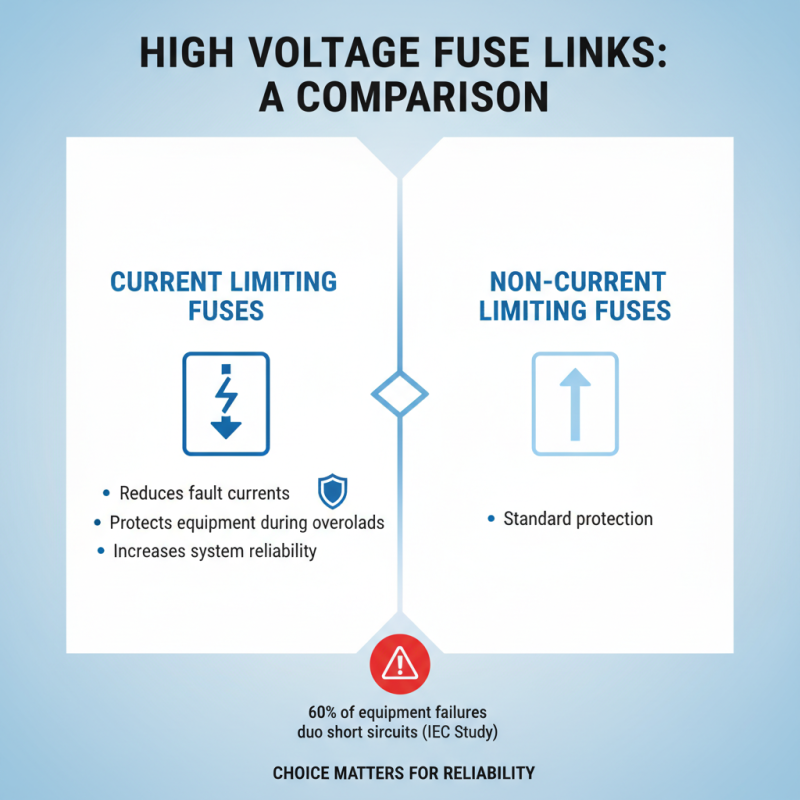
When selecting high voltage fuse links, understanding the different types available is crucial. Fuse links can be categorized mainly into two types: current limiting and non-current limiting. Current limiting fuses can reduce fault currents, which protects equipment during overloads. A study by the International Electrotechnical Commission indicates that approximately 60% of equipment failures are due to short circuits. Therefore, using current limiting fuses can be a wise choice, especially in systems where reliability is paramount.
Non-current limiting fuses, on the other hand, may be less expensive but don't always provide the same level of protection. They simply disconnect the circuit under fault conditions without limiting the fault current. This distinction is significant, considering that the average repair cost for equipment failure can exceed $15,000. While non-current limiting options might fit specific budget constraints, the risk associated with inadequate protection should prompt reflection on long-term expenses.
Another factor to consider is the fuse rating. Selecting a fuse that matches the voltage and current ratings of your system is vital. An incorrect rating can lead to severe consequences, including equipment damage or fire hazards. According to recent industry reports, about 30% of failures in power distribution networks can be traced back to improper fuse ratings. It's essential to review specifications carefully and consult with experts to avoid costly mistakes.
Evaluating Ratings and Specifications for Your Application Needs
When selecting high voltage fuse links, understanding ratings and specifications is crucial. The voltage rating is the first aspect to assess. It determines how much voltage the fuse can handle without failing. Often, the unit is rated in kilovolts (kV). Fuses typically operate at 80% of their rated voltage. This margin is essential for safety and longevity.
Next, consider the current rating. This measures the amount of current the fuse can carry. Using a fuse with a current rating too close to the circuit's maximum can be risky. According to industry reports, a fuse should have a current rating that is 25% higher than expected peak currents. This helps prevent nuisance blowing.
Finally, choose fuses that match your application type. For example, some fuses are designed for power distribution, while others cater to motor circuits. Assessing environmental conditions is vital as well. High humidity or extreme temperatures can influence fuse performance. On occasion, selecting the wrong type of fuse has led to system failures. Therefore, meticulous evaluation is essential to ensure reliability and safety in high voltage applications.
High Voltage Fuse Links Ratings Comparison
This chart illustrates the voltage and current ratings of different high voltage fuse links. Use this data to evaluate which model fits your application needs best.
Best Practices for Installation and Maintenance of Fuse Links
When it comes to fuse links, proper installation and maintenance are key. A secure connection can prevent operational failures. Ensure that all components are compatible. This will avoid unnecessary issues in your system. Check voltage ratings before installation. Misjudgments here can lead to failures.
Tips for Installation: Always turn off the power before starting any work. Use appropriate tools to avoid damage. Double-check your connections. A loose link can lead to shorts and blown fuses. Tight connections are essential for safety.
Regular maintenance is crucial. Inspect your fuse links periodically for signs of wear. Look for corrosion or damage. This can indicate underlying issues. Document your findings to track changes over time. If something feels off, it's best to address it immediately. Waiting can lead to larger problems down the line.