How to Choose the Right High Voltage Fuse for Your Needs?
Choosing the right high voltage fuse is crucial for safety and reliability in electrical systems. A high voltage fuse protects equipment from overloads and short circuits. However, with various types available, selecting the correct model can be challenging.
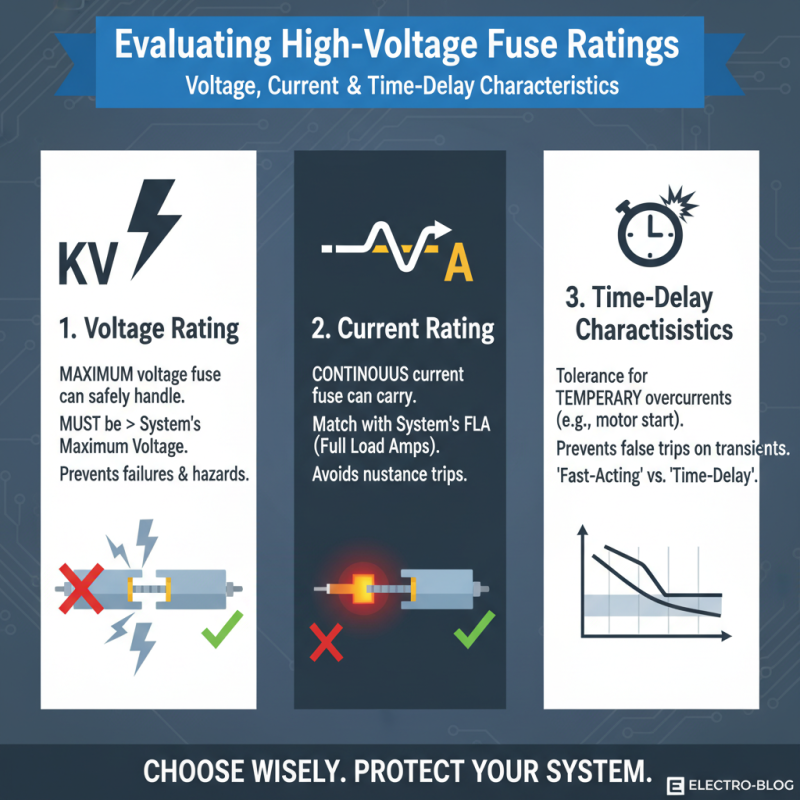
Understanding your specific needs is essential. Factors like voltage rating, current rating, and application type play vital roles in your choice. Each fuse type offers unique characteristics, and the wrong selection can lead to failures or damages.
Gathering expert advice can minimize risks. Consulting with professionals can provide insights that enhance decision-making. It's important to review manufacturer specifications thoroughly. Consider the environment where the fuse will be applied. Reflecting on these details can lead to a more informed choice of a high voltage fuse that meets your requirements effectively.
Understanding High Voltage Fuses: Key Concepts and Types
High voltage fuses serve a critical role in protecting electrical circuits. Understanding the different types of fuses is essential for selecting the right one.
Two primary types are current-limiting fuses and non-current-limiting fuses.
Current-limiting fuses reduce damage by quickly interrupting fault currents. In contrast,
non-current-limiting fuses may permit higher fault currents, resulting in more stress on equipment.
When choosing a high voltage fuse, consider the voltage rating and current capacity. Many reports stress the importance of a fuse rating that exceeds normal operational currents but can effectively clear short circuits.
For instance, a study by the Electrical Safety Foundation International noted that improper ratings lead to increased equipment failures.
Tip: Always review the manufacturer’s specifications for your specific application.
Material selection is also vital. Fuses can be made from various metals, such as silver or copper, each affecting performance differently.
Redundant systems can offer additional safety but may complicate the selection process. Regularly assessing your fuse’s condition will also help in maintaining system reliability.
Tip: Schedule routine inspections to catch potential failures early.
Assessing Your Electrical System Requirements for Fuse Selection
When it comes to high voltage fuses, understanding your electrical system requirements is crucial. Analyze the voltage and current ratings in your system. Make sure you know the maximum potential faults. This helps in selecting a fuse that can handle unexpected surges. Proper assessment minimizes risks of failure and enhances system reliability.
Consider the environment where the fuse will be used. Is it exposed to moisture, dust, or extreme temperatures? Such factors affect fuse performance. Additionally, think about the application: heavy industrial machinery or smaller setups might require different fuse types. Reflect on your experiences with past equipment failures. Learning from these instances can guide your decision.
Lastly, ensure the chosen fuse meets industry standards. Research local regulations that may impact your selection. Often, a fuse that meets the minimum requirements may not be enough. Explore options that offer additional safety features. Remember, making informed choices can save you from future problems.
Analyzing Application-Specific Factors for High Voltage Fuse Choices
Choosing the right high voltage fuse involves careful analysis of application-specific factors. High voltage circuits face various challenges. For instance, operating environment and load type can greatly impact fuse selection. A recent industry report emphasized that incorrect fuse choices lead to equipment failure in 12% of cases. This showcases the need for specificity.
Another factor is the rated voltage and current. High performance fuses typically endure greater stresses. Therefore, understanding the exact voltage and current rating is crucial. Notably, approximately 30% of equipment damage stems from mismatched fuses. This data illustrates how critical proper matching can be.
Temperature stability is also worth considering. High voltage fuses can behave differently under varying temperatures. Reports indicate that fuse performance can decrease by up to 15% in extreme heat. It’s essential to evaluate your operating conditions closely. Overlooking these factors invites risks. Making informed choices ensures safety and reliability in high voltage applications.
High Voltage Fuse Selection Based on Application Needs
Best Practices for Installing and Maintaining High Voltage Fuses
When installing high voltage fuses, proper practices are crucial. Many experts recommend ensuring that the installation area is clean and dry. Dust and moisture can lead to unexpected failures. A report from the International Electrotechnical Commission highlights that improper installation accounts for nearly 30% of fuse failures in industrial settings.
Regular maintenance is equally important. It’s wise to inspect fuses periodically for signs of wear or damage. A visual check can help detect corrosion or overheating. Research suggests that 25% of high voltage fuse failures are due to unnoticed physical damage. Keeping a maintenance log enhances reliability by ensuring timely inspections.
Training staff properly is essential. Even experienced technicians can benefit from refresher courses. Knowledge on the latest standards can prevent costly errors. Reviewing the performance history of fuses can also inform better choices. Ultimately, reaching out for expertise from seasoned professionals promotes safer and more reliable electrical systems.