How to Choose the Right Ceramic Fuse for Your Electrical Needs?
Choosing the right ceramic fuse is crucial for electrical safety. A ceramic fuse provides protection against overloads and short circuits. According to a report by the International Electrotechnical Commission, improper fuse selection can lead to 65% of electrical failures. Industry expert, Dr. Emily Chang, emphasizes, "Understanding the right specifications is key to preventing catastrophic failures."
The market for ceramic fuses has expanded significantly, driven by increased demand in industrial applications. These fuses are known for their high-temperature resistance and reliability. However, many consumers still struggle with various specifications. Not every ceramic fuse suits every situation. Selecting the wrong type can result in performance issues and operational downtime.
Practical knowledge about the application requirements is essential. A detailed understanding of voltage ratings, current ratings, and breaking capacity is necessary. Many overlook these details, impacting system performance. Despite advancements, users often encounter challenges. They may find themselves reflecting on their choices after facing issues.

Understanding Ceramic Fuses: Types and Applications
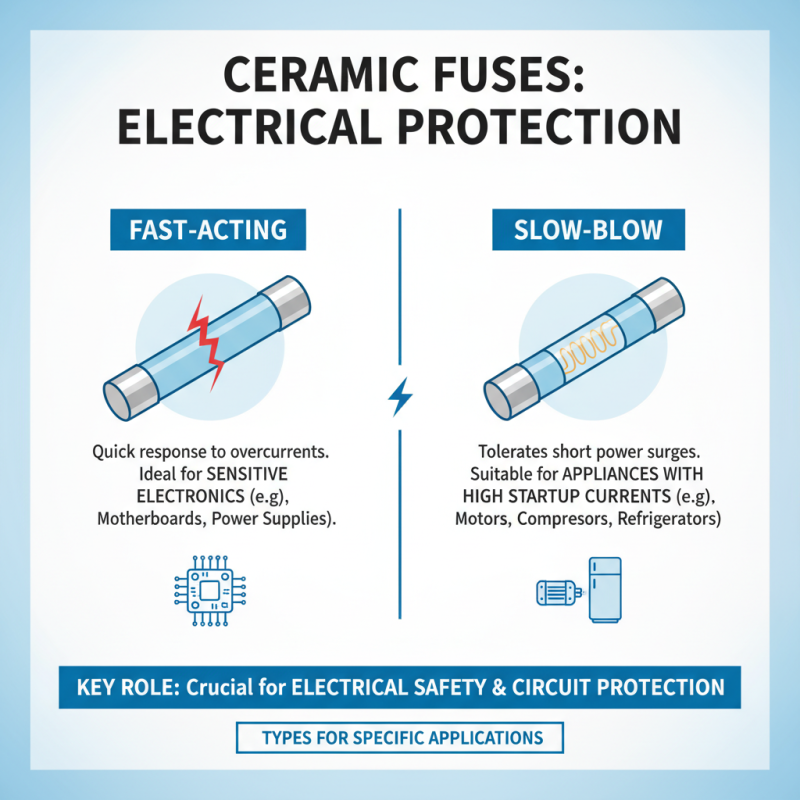
Ceramic fuses play a crucial role in electrical safety and protection. They come in various types, each designed for specific applications. For instance, fast-acting ceramic fuses quickly respond to overcurrents, making them ideal for circuit protection in sensitive devices. Slow-blow ceramic fuses, on the other hand, can tolerate short surges. This trait is beneficial in appliances with high startup currents.
According to industry reports, the market demand for ceramic fuses has surged by 20% in recent years. This growth is driven by the increasing reliance on electronic devices. In automotive applications, for example, the need for reliable circuit protection is paramount. Ceramic fuses can withstand high temperatures and offer a lower failure rate compared to traditional fuses. Users must consider the amp rating and voltage rating carefully. Miscalculations can lead to equipment damage or safety hazards.
When selecting a ceramic fuse, users often overlook environmental factors. The fuse's location can impact its performance. If placed in a humid area, its effectiveness could diminish. Additionally, regular inspections are vital. Fuses can degrade over time, and neglecting this can lead to critical failures. Proper choice and maintenance ensure that ceramic fuses provide the protection your electrical systems need.
Key Factors in Selecting the Right Ceramic Fuse
Choosing the right ceramic fuse involves understanding several key factors. One important aspect is the current rating. Consider the maximum current your circuit may experience. This ensures the fuse can handle the load without blowing prematurely.
Next is the voltage rating. Ensure the fuse's voltage rating meets or exceeds that of your system. Missing this detail can lead to serious failures. Also, check the breaking capacity. This indicates the fuse’s ability to interrupt fault currents. An inadequate breaking capacity can result in dangerous situations.
Lastly, pay attention to size and form factor. The physical dimensions should fit your application. If the fuse is too large, it won't fit. If it’s too small, it can malfunction. Remember to reflect on these details before making a decision. Overlooking even one factor can lead to costly mistakes.
How to Determine the Voltage and Amperage Ratings
When selecting a ceramic fuse, understanding voltage and amperage ratings is crucial. Voltage ratings indicate the maximum voltage a fuse can safely interrupt. Choosing a fuse with the right voltage prevents catastrophic failures. A report by the National Electrical Manufacturers Association notes that around 15% of fuse failures stem from improper voltage ratings. This statistic underscores the importance of proper selection.
Amperage ratings determine how much current a fuse can handle. A fuse rated too low for your application may blow frequently, leading to downtime and frustration. If it's rated too high, it can fail to protect your circuits, risking damage to equipment. According to IEEE standards, the average amperage rating required for residential fuses is around 15 to 20 amps. It’s often wise to choose a fuse with a slightly higher rating than the anticipated load but within safe limits.
Additionally, one must consider environmental factors. Operating conditions such as temperature can affect the performance of a fuse. High ambient temperatures may reduce a fuse's effectiveness, potentially leading to overcurrent conditions. Analyzing these details ensures more reliable choices. Each aspect of rating invites scrutiny and reflection, ensuring that choices are informed, not arbitrary.
How to Choose the Right Ceramic Fuse for Your Electrical Needs
This chart illustrates the relationship between the voltage and amperage ratings of various ceramic fuses. Understanding these ratings helps in selecting the appropriate fuse for your specific electrical applications.
Analyzing Circuit Conditions for Optimal Fuse Selection
Choosing the right ceramic fuse requires a thorough understanding of your circuit conditions. Start by assessing the voltage levels in your system. Ensure the fuse can handle the maximum voltage. Too low of a rating can cause failures.
Next, consider the current rating. This rating should match or exceed the typical load. Otherwise, frequent blowouts may occur. Analyze the peak current during startup. It can be significantly higher than normal levels. Selecting a fuse with an appropriate current rating prevents inconvenience and ensures safety.
Lastly, evaluate the environmental conditions. Temperature fluctuations can affect fuse performance. High humidity may also influence reliability. Ignoring these factors could lead to inefficiencies or hazards. It is essential to think these through carefully. Balancing these elements leads to better fuse selection.
How to Choose the Right Ceramic Fuse for Your Electrical Needs?
| Fuse Rating (A) |
Voltage Rating (V) |
Breaking Capacity (kA) |
Material |
Application |
| 2 |
250 |
3 |
Ceramic |
Lighting |
| 5 |
250 |
6 |
Ceramic |
Appliances |
| 10 |
250 |
10 |
Ceramic |
Power Tools |
| 15 |
400 |
15 |
Ceramic |
Industrial Equipment |
| 20 |
500 |
20 |
Ceramic |
Motor Protection |
Installation and Maintenance Tips for Ceramic Fuses
When installing ceramic fuses, ensure you select the correct rating. Each fuse has a specific amperage and voltage rating. A wrong choice can lead to issues. Verify requirements against your electrical system. Take time to read specifications carefully.
During installation, turn off power first. This step is crucial for safety. Position the fuse securely in its holder. It should fit snugly without excessive force. After installation, check for any signs of stress or damage. Loose connections can create hazards.
Maintenance of ceramic fuses can be overlooked. Regularly inspect for any discoloration or cracks. These are signs they may need replacing. Keep an eye on the performance of your electrical system. Unexplained tripping might indicate an issue.