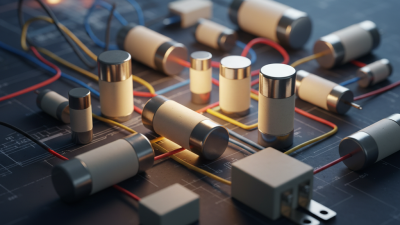
Electrical faults can develop in seconds, but a correctly selected fuse can limit the damage. A Ceramic Fuse is often used where its body, current rating, and interrupting capacity suit the equipment. Ceramic construction alone does not guarantee reliable protection. The fuse must match the circuit’s voltage, current, fault conditions, and time-current requirements.
Small details matter. A fuse that fits the holder may still be electrically unsuitable. Check the equipment manual and the manufacturer’s datasheet before choosing a replacement. A higher current rating is not a safe shortcut. It may allow wiring or components to overheat before the fuse opens. Not sure? Pause and verify.
This guide examines ten ceramic fuse options and the features that help distinguish them, including dimensions, speed, ratings, and intended applications. These comparisons can help narrow the choices, but no single model is best for every circuit. Operating temperature, vibration, and the available fault current can affect performance. Some specifications may be easy to overlook, and product listings do not always explain them clearly. When a rating or application is uncertain, consult the equipment manufacturer or a qualified technician. A careful check now is less frustrating than a failed repair later.
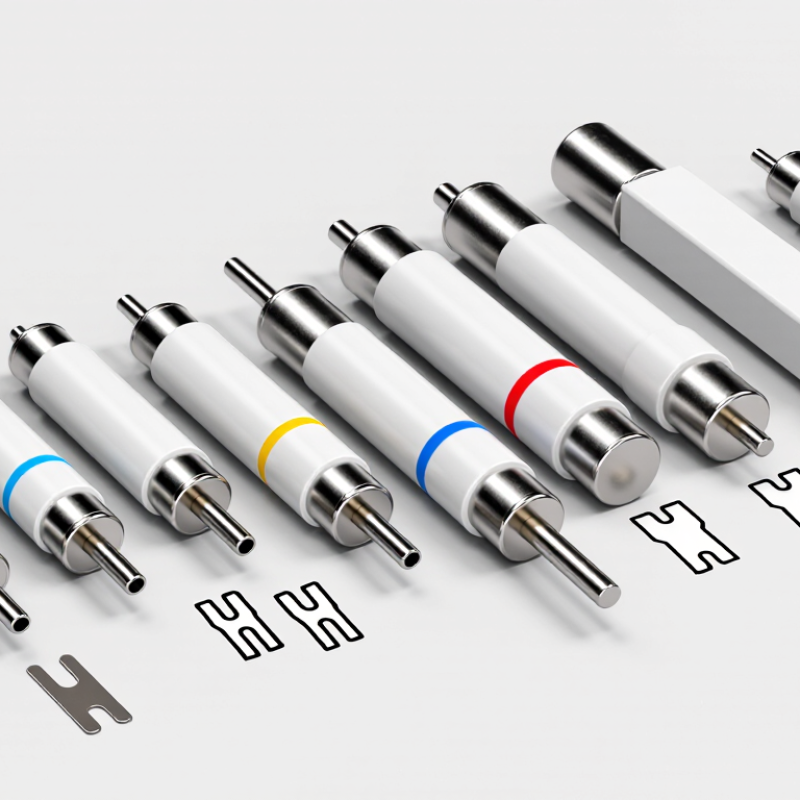
Ceramic fuses use a heat-resistant insulating body, often with silica sand inside. When excessive current heats the fuse element, it melts and opens the circuit. The casing and filler help contain heat and reduce arcing during interruption. Small part. Serious job. A fuse’s current rating matters, but so do voltage rating, breaking capacity, and time-current behavior. IEC 60269-1 covers low-voltage fuses for systems up to 1,000 volts AC or 1,500 volts DC. Those limits describe the standard’s scope, not a guarantee that every fuse suits every circuit. Check the equipment specifications.
The need for dependable protection is not abstract. NFPA’s analysis of U.S. home fires from 2015–2019 estimated that electrical distribution and lighting equipment were involved in about 34,000 home structure fires annually. That figure does not mean fuses alone could have prevented them. It does show why correctly coordinated protection matters. It is tempting to choose a replacement by amperage alone; that shortcut deserves a second look. Match the original type and ratings, and inspect the holder for looseness, corrosion, or heat discoloration. A ceramic body can hide damage less visibly than a cracked glass tube. That detail is easy to miss.
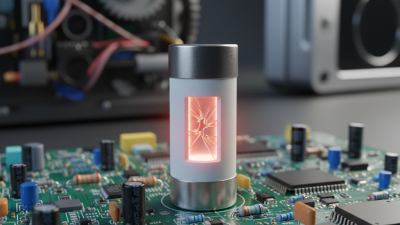
When a fault sends excess current through a ceramic fuse, its internal metal element heats up and melts. The circuit opens. This response can limit damage to wiring and connected equipment, but only when the fuse is correctly rated for the circuit.
Many ceramic fuses contain silica sand around the element. As the element melts, the sand helps absorb heat and suppress the electrical arc that can form across the break. The ceramic body also withstands heat better than many glass bodies, though construction varies. Short circuits can produce very high fault currents. A fuse therefore needs an interrupting rating suitable for the available current, as well as the correct voltage and current ratings. A rating that looks close is not necessarily safe.
In repair work, I check the markings and the equipment documentation before replacing a fuse. That detail matters. A blown fuse may indicate a deeper fault, not just a worn part. Replacing it with a higher-rated fuse can leave wiring exposed to dangerous heat. I have also seen a fuse appear intact while testing open, so visual inspection alone is imperfect. Use a suitable meter and follow the equipment maker’s service guidance.
When comparing ceramic fuses, start with the ratings, not the body color or package size. Match rated current and voltage to the circuit, then check the interrupting rating against the maximum fault current available at the installation. IEC 60269, the international low-voltage fuse standard series, covers systems up to 1,000 V AC or 1,500 V DC. Those limits describe the standard’s scope; they do not confirm that a particular fuse suits your equipment. Not just amperage. Verify the exact device markings and manufacturer’s technical sheet.
Construction affects how a fuse handles a fault. Ceramic tubes often contain granular filler, commonly silica-based, to absorb heat and help quench the arc after the element melts. Compare the time-current curve and I²t rating, too: these indicate how quickly the fuse responds and how much energy passes during interruption. Small details matter. Check terminal style, dimensions, and temperature limits against the holder and operating environment. A fuse that fits physically may still be electrically unsuitable. The marking alone is not the whole story. I²t values can be easy to misread, especially when comparing fast-acting and time-delay designs; consult the specified test conditions before treating two figures as equivalent.
Ceramic fuses serve different circuits because their bodies tolerate heat and help contain arcs. Ten useful types are cartridge, miniature, fast-acting, time-delay, high-rupturing-capacity, current-limiting, semiconductor, bolt-down, panel-mount, and high-voltage fuses. These categories overlap: a miniature cartridge fuse, for example, can also be time-delay. Small detail, big consequence.
Fast-acting types suit sensitive electronics, while time-delay versions ride through brief motor-start surges. High-rupturing-capacity and current-limiting designs address circuits with substantial fault energy; semiconductor fuses respond quickly to protect power electronics. Bolt-down fuses secure firmly in vehicles or equipment, while panel-mount versions simplify replacement in control cabinets. High-voltage ceramic fuses require ratings matched to the specific system. IEC 60269-1 covers low-voltage fuses rated up to 1,000 volts AC or 1,500 volts DC; its scope is a useful reference, not a substitute for selecting the right fuse. UL 248 also provides requirements for low-voltage fuse classes. Check rated current, voltage, breaking capacity, and time-current characteristics against the equipment documentation. A fuse that physically fits may still be unsuitable. Selection is not always tidy, especially when an application combines motor inrush and sensitive electronics.
| Ceramic Fuse Type | Typical Format | Representative Ratings | Operating Characteristic | Typical Applications |
|---|---|---|---|---|
| Fast-acting miniature cartridge | 5 × 20 mm ceramic tube with metal end caps | Commonly up to 250 V AC; approximately 0.1–10 A | Opens quickly under sustained overcurrent; limited tolerance for inrush | Power supplies, control boards, and electronic equipment without large startup surges |
| Time-delay miniature cartridge | 5 × 20 mm ceramic tube; time-delay element design | Commonly up to 250 V AC; approximately 0.1–10 A | Tolerates brief startup current, then clears sustained overloads | Transformers, motors, and equipment with capacitive or inductive inrush |
| 6.3 × 32 mm ceramic cartridge | ¼ × 1¼ in cylindrical tube with end caps | Often rated up to 250 V AC; approximately 0.1–20 A | Available in fast-acting and time-delay versions | Industrial instruments, appliances, and equipment requiring a larger cartridge format |
| 10 × 38 mm cylindrical HRC fuse | 10 × 38 mm ceramic cylinder for a compatible fuse holder | Commonly 500–600 V AC; approximately 0.5–32 A | High-rupturing-capacity design; time-current behavior depends on fuse class | Control circuits, small distribution panels, and photovoltaic string circuits when specifically rated for the system |
| 14 × 51 mm cylindrical HRC fuse | 14 × 51 mm ceramic cylinder with metal end contacts | Commonly up to 690 V AC; approximately 2–50 A | Available in general-purpose, motor, and semiconductor-protection classes | Industrial control panels, motor circuits, and compact power distribution |
| 22 × 58 mm cylindrical HRC fuse | 22 × 58 mm ceramic cylinder for a matching holder | Commonly up to 690 V AC; approximately 2–125 A | Higher current capacity than smaller cylindrical formats; class-specific clearing behavior | Feeders, industrial machinery, and larger panel circuits |
| NH knife-blade HRC fuse link | Ceramic body with blade contacts; NH size varies by rating | Commonly 500 or 690 V AC; approximately 2–1,250 A across sizes | High breaking capacity; available in different utilization categories | Low-voltage switchboards, distribution equipment, and industrial feeders |
| Bolted square-body HRC fuse | Ceramic rectangular body with bolted terminals | Often 500–690 V AC; ratings vary widely, from tens to hundreds of amperes | Designed for secure, low-resistance connections and high fault-energy interruption | Power converters, industrial distribution, and high-current equipment |
| Ultra-fast semiconductor fuse | Ceramic cylindrical or square bolted body; aR or gR class may be used | Commonly up to 690 V AC; ratings range from a few amperes to hundreds of amperes | Very fast current limiting to reduce energy let-through; verify whether the class protects against overloads as well as short circuits | Inverters, rectifiers, drives, and protection of power semiconductor devices |
| Automotive ceramic cartridge or bolt-down fuse | Ceramic cartridge or strip-style body with vehicle-specific terminals | Typically 32 V DC in many low-voltage vehicle systems; current ratings depend on the format | Vehicle-rated design; select for the specified DC voltage, current, and circuit conditions | Automotive battery distribution, accessory circuits, and other low-voltage vehicle wiring |
| Ratings shown are representative ranges, not universal specifications. Confirm the fuse’s exact voltage, current, breaking capacity, time-current curve, utilization category, holder compatibility, and applicable standard before selection. AC and DC ratings are not interchangeable. | ||||
Choosing a ceramic fuse safely starts with the equipment’s label or service manual. Match the rated current, voltage, physical size, and operating characteristic, such as fast-acting or time-delay. A fuse that fits the holder may still be the wrong fuse. Ceramic bodies often hide the fuse element, so appearance alone cannot confirm whether it has failed.
Before replacing one, disconnect the appliance from power and verify it is de-energized with a suitable tester. Remove the fuse with an insulated fuse puller; never pry against live contacts. NFPA’s Electrical Fires report found an average of 46,700 reported U.S. home fires involving electrical distribution or lighting equipment each year from 2015 to 2019. That figure is not specific to fuses, but it underscores why improvised repairs deserve caution. If the replacement blows again, stop and have the equipment checked. Never bridge it.
Tips: Photograph the fuse markings before removal, then compare every rating on the replacement. Keep fingers away from exposed contacts. Stop if unsure. A blown fuse can be a symptom, not the whole problem.