How to Choose the Right DIN Standard Fuse in 2026?
Choosing a DIN Standard Fuse in 2026 is not a matter of matching one number on a label. The fuse must suit the circuit’s voltage, operating current, prospective short-circuit current, and load profile. A small mismatch can matter: a motor starting beside a warm distribution board may behave differently from a steady resistive load.
The IEA’s Electricity 2024 report projected average global electricity-demand growth of 3.4% per year from 2024 through 2026. That wider shift makes careful protection choices increasingly relevant across buildings, industry, and electrified equipment. Yet demand growth alone cannot determine a fuse rating. DIN EN IEC 60269 provides the relevant fuse-system framework; the actual selection still depends on the installation and manufacturer data.
Paul G. Slade, author of Electrical Contacts: Principles and Applications, offers a useful engineering perspective on the importance of contact behavior. In practical terms: “A fuse must be judged within its circuit, not by its rating alone.” That sentence is a selection principle, not a verified verbatim quotation from Slade. It deserves that distinction.
This guide will examine fuse class, rated current, breaking capacity, time-current curves, and coordination with cables and downstream devices. A datasheet can look reassuring. It may still leave out the installation detail that decides the choice. Expectation matters; so does verification. Check the current standard edition, product documentation, and site conditions before specifying a fuse.
Identify DIN Fuse Classes: gG, aM, and IEC 60269-2 NH Links
How to Choose the Right DIN Standard Fuse in 2026?
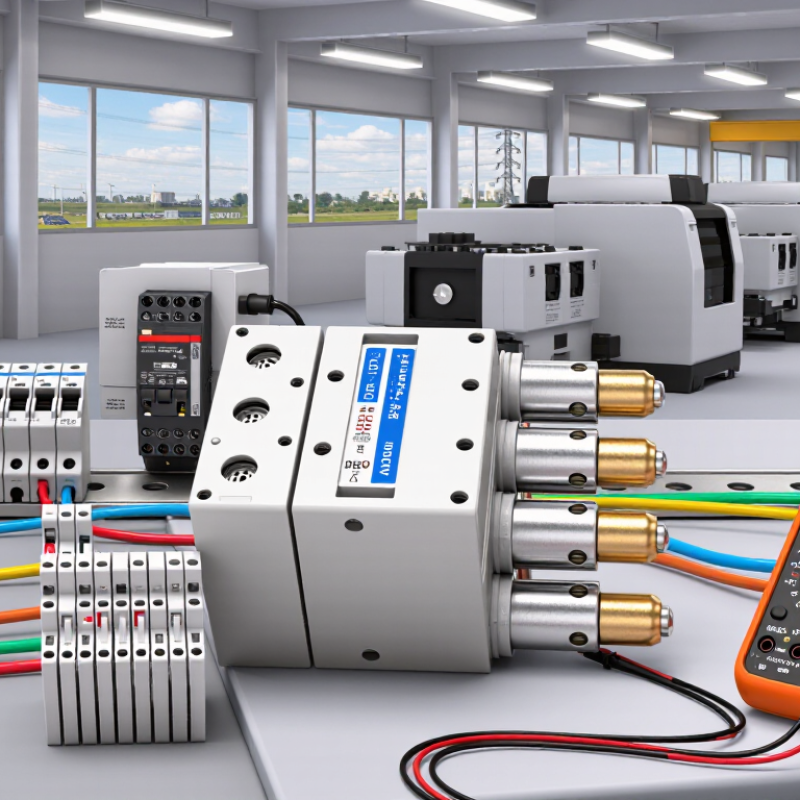
Choosing a DIN fuse starts with the circuit’s job, not just its rated current. A gG fuse provides full-range protection against overloads and short circuits. It suits many cable and general-purpose circuits. An aM fuse is designed for short-circuit protection in motor circuits. Pair it with a correctly set overload relay; the fuse alone does not protect the motor from sustained overload. The distinction matters. A wrong class can leave equipment exposed or cause unnecessary trips.
IEC 60269-2 covers low-voltage fuse systems, including NH fuse links used in industrial settings. NH describes a fuse-link system and size format, not a protection class like gG or aM. Check that the link matches the fuse base, voltage, current, and required breaking capacity. Then compare its time-current curve with the load’s starting current and the upstream protective device. A motor that draws a sharp current spike at startup can change the choice. Real installations are not always tidy, so verify the equipment documentation and have a qualified professional confirm coordination.
Tips: Read the marking on the existing link, but do not rely on it alone. Confirm the class, NH size, and ratings against the circuit design. There is no perfect shortcut.
Match Rated Voltage: NH Fuse Links Commonly Support 500 or 690 V AC
An NH fuse link marked 500 V AC is intended for circuits within its specified voltage rating; many NH links are also available with a 690 V AC rating. Check the equipment nameplate and supply details before choosing. A 690 V circuit must not use a 500 V link. A higher voltage marking alone does not prove that a fuse is suitable for every lower-voltage installation.
Voltage is only one part of the match. Confirm the fuse’s current rating, utilization category, breaking capacity, and compatibility with the fuse base. Then check the manufacturer’s technical data for the exact link and application. This is where quick guesses fail. For example, a workshop panel operating at 400 V AC may still require a specific fuse category and fault-current rating. Don’t choose a 690 V link simply because its voltage figure looks safer. It may not provide the required protection. Installation conditions matter, too: heat inside a crowded enclosure can affect performance. I’d verify the circuit data twice; it is easy to overlook one detail. When the supply voltage or fault level is uncertain, have a qualified electrical professional confirm the selection before installation.
Verify Rated Breaking Capacity: Some NH Links Specify up to 120 kA
How to Choose the Right DIN Standard Fuse in 2026?
Verify Rated Breaking Capacity: Some NH Links Specify up to 120 kA
When choosing a DIN standard fuse, check its rated breaking capacity against the prospective short-circuit current at the installation point. This rating is the maximum fault current the fuse can safely interrupt under specified conditions. Some NH fuse links are rated up to 120 kA, but that figure does not apply to every link or every voltage. Confirm the exact rating in the product datasheet, including its voltage conditions. A fuse with insufficient breaking capacity may fail to clear a fault safely. Do not confuse this rating with the fuse’s normal current rating.
Also check the system voltage, fuse size, and utilization category, such as gG or aM. These details affect whether the fuse suits the circuit and its protective role. In a panel, available fault current can differ from estimates, especially after supply or transformer changes. That is an easy detail to miss. Verify the value with a qualified electrical professional and use current system information.
Tips: Compare the fuse’s breaking-capacity rating with the calculated fault current at its exact location. Check the specified voltage, not just the largest number on the label. If the calculation or datasheet is unclear, pause and verify it before installation.
How to Choose the Right DIN Standard Fuse in 2026? — Verify Rated Breaking Capacity: Some NH Links Specify up to 120 kA
| Selection Check |
Example NH Fuse-Link Rating |
What to Verify |
Why It Matters |
| Fuse system and size |
NH00, NH1, NH2, or NH3 |
Confirm the fuse base, contact arrangement, and physical size are compatible with the link. |
A link must fit the installed fuse base and comply with the equipment’s specified fuse system. |
| Rated voltage |
Common AC ratings include 400 V, 500 V, and 690 V |
Check the link’s marked rated voltage against the system voltage and AC or DC application. |
A fuse-link’s voltage rating and breaking capacity can differ between AC and DC applications. |
| Rated current |
Illustrative NH ratings: NH00 up to 160 A; NH1 up to 250 A; NH2 up to 400 A; NH3 up to 630 A |
Select the current rating based on the circuit design, cable protection, load, and coordination requirements. |
These are typical size ranges, not a substitute for checking the available ratings of the specific fuse-link. |
| Rated breaking capacity |
Some NH fuse-links specify up to 120 kA at a stated AC voltage |
Compare the marked breaking-capacity value and its test voltage with the prospective short-circuit current at the installation point. |
The fuse must be capable of safely interrupting the maximum fault current. A 120 kA value should not be assumed for every NH link. |
| Utilization category |
Common examples include gG for general-purpose full-range protection and aM for motor-circuit short-circuit protection |
Match the category to the protection function and any separate overload protection used in the circuit. |
Different categories have different operating characteristics and intended applications. |
| Standards and documentation |
Check the applicable IEC 60269 requirements and the product’s technical documentation |
Verify the exact standard edition, rated values, operating characteristics, and installation instructions. |
Standards define requirements; the specific link’s markings and documentation establish its actual ratings. |
Important: Values shown are selection examples, not universal ratings for every NH fuse-link. Always verify the exact link markings and technical documentation, and have short-circuit protection and coordination checked for the installation.
Select Current Rating with IEC 60269 Time-Current Curves and Load Data
Choose a DIN-standard fuse by matching its current rating to real load data, not just the equipment nameplate. Record steady operating current, expected overloads, and startup peaks. Then compare these values with the fuse’s IEC 60269 time-current curve. Small details matter. A rating that looks adequate at room temperature may behave differently inside a warm, crowded enclosure.
Check whether the load is resistive, inductive, or subject to frequent switching. A motor, for example, may draw several times its running current during startup. The curve should tolerate that brief surge while still opening fast enough during a sustained fault. Use the curve’s minimum and maximum operating bands, rather than treating it as an exact trip line. Not on paper alone. Verify the fuse’s rated voltage and breaking capacity against the installation’s available fault current.
Also confirm that the fuse protects the connected cable, including its permissible current and installation conditions. Ambient temperature, nearby heat sources, and repeated cycling can affect selection. Compare calculated values with the relevant fuse data sheet and the equipment manufacturer’s requirements. Load measurements are useful, but a short monitoring period can miss seasonal peaks or unusual starts. That uncertainty deserves a second look before final selection.
Check NH Size, Coordination, and Manufacturer Ratings Before Installation
How to Choose the Right DIN Standard Fuse in 2026?
For 2026, check the NH size, system voltage, and rated current before installation. IEC 60269-1 covers low-voltage fuses rated up to 1,000 V AC or 1,500 V DC. IEC 60269-2 sets supplementary requirements for industrial fuse systems, including standardized NH dimensions. Common size designations run from NH 000 and 00 through sizes 0 to 4. Confirm the fuse holder’s dimensions and connection type; a similar-looking link may not fit safely. Fit is not protection. Check the fuse’s utilization category, such as gG for general cable protection or aM for motor circuits. The correct category depends on the application.
Coordination needs more than matching amperage. Compare the fuse’s time-current curve with the upstream protective device and downstream equipment. Check rated breaking capacity and the manufacturer’s published I²t and let-through data against the installation’s prospective fault current. A higher rating is not automatically a better choice. It may delay operation and leave conductors exposed to excess heat. Review the manufacturer’s voltage, frequency, ambient-temperature, and power-loss ratings, too. Panel heat can affect performance. I would treat a catalog match as a starting point, not proof; actual fault levels and coordination curves still need checking before energizing the circuit.