- Home
- About Us
- Products
- News
- Blog
- Contact Us
Leave Your Message
Expulsion Fuses are protective devices commonly used on overhead distribution systems. They help disconnect a faulty section when excessive current melts a replaceable fuse link. Their operation is visible and comparatively simple, but the details matter. A fuse must match the system’s voltage, available fault current, and protection requirements.
Inside the fuse, the link sits within an insulating tube. When fault current melts it, an electrical arc forms. Heat from the arc can generate gas inside the tube, helping drive the arc outward and extinguish it. The resulting interruption can leave a visible gap. That is the basic principle, not a guarantee of identical performance: designs and operating conditions differ.
Timing is critical. A fuse that operates too slowly may not protect connected equipment as intended. One that operates too quickly can interrupt service unnecessarily. Engineers therefore consider coordination with upstream and downstream devices, along with load levels and fault studies. A small detail can change the result.
This guide explains the main parts, operating sequence, applications, and practical limitations of Expulsion Fuses. It also distinguishes normal switching behavior from fault interruption, since the two are not interchangeable. Selection, installation, and maintenance should follow manufacturer instructions and be handled by qualified personnel using appropriate safety procedures. Even a familiar device deserves careful review.
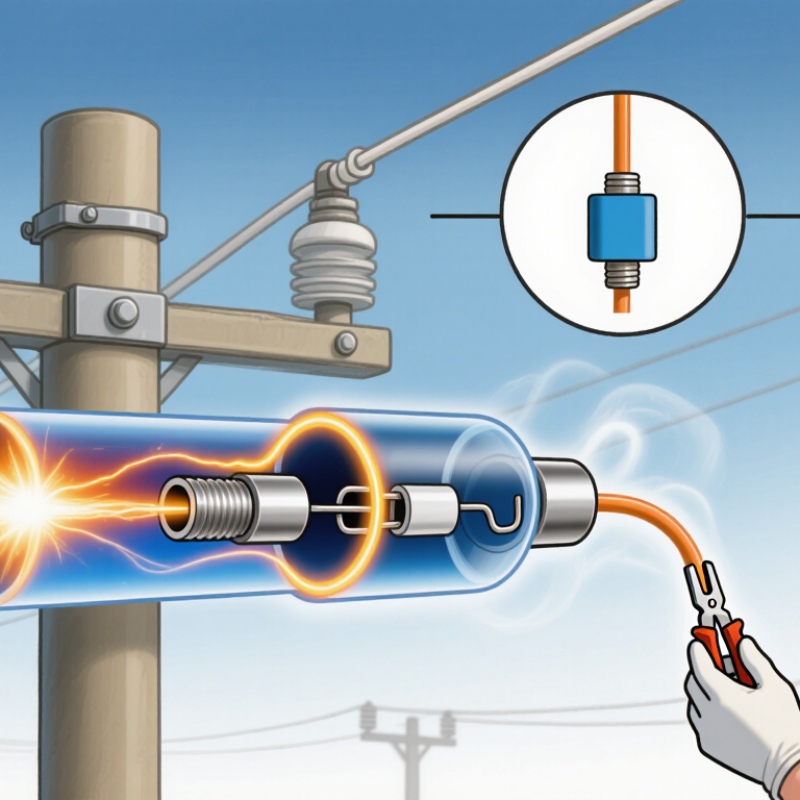
An expulsion fuse is an overcurrent protection device commonly installed on overhead distribution lines and transformer connections. Its replaceable fuse link melts when current exceeds its rated limit. The resulting arc forms inside a special tube, where heat produces gases that help cool and extinguish it. The tube then vents those gases, interrupting the circuit. The cutout drops open, giving crews a visible indication that the fuse has operated. A clear signal.
Its purpose is to disconnect a faulted section before excessive current damages equipment or spreads disruption. Selection depends on system voltage, available fault current, and coordination with other protective devices. A fuse that is too sensitive can operate during a temporary event; one that is poorly matched may not protect equipment adequately. Field conditions matter, too: contamination, weather, and aging can affect performance. Not foolproof. The U.S. Energy Information Administration’s 2022 reliability data reported about 5.5 hours of average electricity interruptions per customer, including major events. That figure describes overall reliability, not expulsion-fuse effectiveness, but it shows why dependable distribution protection matters. Correct installation and periodic inspection remain essential.
| Dimension | Description | Practical Significance |
|---|---|---|
| Definition | An expulsion fuse is an overcurrent protection device that interrupts a circuit by melting a fuse element and expelling gases produced inside its fuse tube. | It helps disconnect a faulted section of an electrical distribution system from its source. |
| Main purpose | To protect distribution equipment and conductors from damaging overcurrents, such as those caused by short circuits or severe overloads. | When correctly selected and coordinated, it can limit equipment damage and reduce the extent of an outage. |
| Typical components | A fuse link or element, an insulating fuse tube, contact and terminal fittings, and—on many outdoor cutout assemblies—a hinged carrier or dropout mechanism. | The fuse link senses excessive current; the tube and associated parts support interruption and isolation. |
| How it operates | Excessive current heats and melts the fuse element. An arc forms as the element parts, and the arc heats the tube lining, generating gases that help cool, lengthen, and deionize the arc. | On an alternating-current system, interruption is completed when the arc is extinguished at a current zero and the gap withstands the recovery voltage. |
| Expulsion action | Gas pressure and the design of the fuse tube help drive arc products out of the tube during interruption. The interruption process is generally accompanied by a visible and audible discharge. | Because gases and arc products are released, installation clearances and the manufacturer's application instructions matter. |
| Common applications | Commonly used on overhead medium-voltage distribution circuits, including transformer protection and sectionalizing of distribution feeders. | Outdoor cutout assemblies can provide both overcurrent protection and a visible open gap after operation. |
| After operation | Depending on the device design, the fuse carrier may drop open to indicate operation and isolate the circuit. The fuse link or assembly must be inspected and replaced as directed. | A fuse that has operated should not be re-energized until the cause of the fault has been investigated and the equipment is deemed safe. |
| Key selection factors | Selection depends on system voltage, load current, available fault current, equipment withstand capability, fuse time-current characteristics, and coordination with other protective devices. | Ratings and coordination requirements vary by installation; selection should be based on engineering guidance and applicable standards. |
| Limitations | Interruption capability is limited by the device's rated voltage and interrupting rating. Expulsion fuses are not interchangeable with other fuse types or circuit breakers solely because their current ratings appear similar. | Use only a device specifically rated for the system conditions and installed in accordance with its instructions and applicable electrical codes. |
| Safety note | Installation, replacement, and inspection involve electrical hazards and should be performed by qualified personnel using appropriate de-energization, testing, and protective procedures. | Follow local safety rules, utility practices, and the equipment manufacturer's instructions. |