Leave Your Message

Top 10 NH Fuse Manufacturers for Global Buyers

Choosing the right Nh Fuse manufacturer affects equipment safety, maintenance costs, and supply continuity. Global buyers need more than attractive prices. They need verified production capability, stable quality, and responsive technical support.

This guide presents ten leading NH fuse manufacturers for international procurement teams. Each company is considered through practical criteria, including product range, rated current, breaking capacity, voltage options, and compliance documentation. Factory experience also matters. A reliable supplier should explain its testing process, material selection, and batch traceability clearly.

Look for evidence, not slogans. Check whether the manufacturer provides test reports, certification details, dimensional drawings, and installation guidance. Packaging deserves attention too. A well-sealed fuse box can prevent moisture damage during long-distance shipping. Response time is another useful signal, especially when replacement parts are urgently needed.

No ranking fits every project. A utility contractor may value high fault-interruption performance, while a factory buyer may prioritize delivery speed and compatible accessories. Some manufacturers appear strong on paper but communicate poorly after payment. That possibility deserves careful review.

Buyer needs differ.

The following overview helps global purchasers compare established NH fuse suppliers with greater confidence. It also highlights practical questions to ask before approval, such as minimum order quantities, warranty terms, customization limits, and after-sales support. Independent verification remains wise, because specifications can change. Good sourcing is not merely selecting a famous name; it is matching verified capability with the actual demands of your electrical system.

Top 10 NH Fuse Manufacturers for Global Buyers

NH Fuse Basics and Their Role in Low-Voltage Electrical Protection

Top 10 NH Fuse Manufacturers for Global Buyers

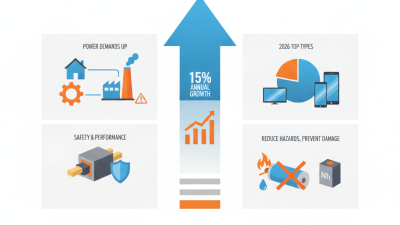
NH fuses are knife-blade fuse links used in low-voltage distribution systems. They protect cables, transformers, and motor circuits from overloads and short circuits. Under IEC 60269-1 and IEC 60269-2, common gG fuse links provide full-range protection for general applications. Their compact body and visible indicator support faster maintenance. Grand View Research valued the global electrical fuses market at approximately US$4.2 billion in 2023. Demand is rising with grid upgrades and industrial electrification. The number alone does not guarantee product quality.

In practical installations, correct coordination matters more than a high interrupting rating. An NH fuse must match voltage, current, utilization category, prospective fault current, and cable capacity. Poor contact pressure can create hot spots at the blade terminals. I have seen a correctly rated fuse fail early because the holder was loose. That detail is easy to overlook. Buyers should review temperature-rise data, time-current curves, loss values, and test certificates. Independent verification against IEC requirements also improves purchasing reliability.

Tips: Confirm the fuse class before ordering. Check dimensions and mounting compatibility. Compare pre-arcing and total-clearing curves. Keep spare links in dry, labeled storage. Never replace a fuse with a higher rating without reviewing coordination. One practical weakness remains: catalog data may not reflect heat, vibration, or repeated switching at the installation site.
How to Evaluate NH Fuse Manufacturers for International Purchasing

When comparing the top 10 NH fuse manufacturers for global purchasing, do not rely on rankings alone. A reliable supplier should provide clear ratings for voltage, current, breaking capacity, and operating class. Check whether these values match your switchgear design. Small mismatches can cause expensive delays.

Request test reports, factory inspection records, and traceability details for each batch. Confirm compliance with relevant IEC 60269 requirements and ask how routine tests are controlled. A serious manufacturer can explain its production steps, from alloy selection to contact finishing and final testing. Look for calibrated equipment, documented quality procedures, and trained inspectors. Pictures are useful, but live video audits reveal more.

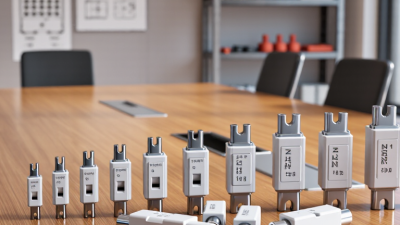
Samples should be tested under realistic conditions, not only accepted from a catalog. Examine the fuse body, blades, indicator, and packaging after transport simulation. Ask about salt mist, humidity, storage temperature, and vibration if your shipment crosses harsh climates. Delivery history matters too. Compare lead times, minimum order quantities, spare-part policies, and export documents. Some suppliers offer low prices but provide vague answers about batch consistency. That is a warning.

Keep communication practical. Ask for one complete technical file, not scattered attachments. Record every promise in the purchase agreement, including inspection rights and corrective-action timing. My own evaluation would still remain cautious; a successful sample cannot prove long-term performance. Factory capacity can change, and certificates may expire. Recheck critical evidence before each major order.

Top 10 NH Fuse Manufacturers for Global Buyers - How to Evaluate NH Fuse Manufacturers for International Purchasing
Rank Anonymous Manufacturer Profile Typical NH Fuse Portfolio Common Rated Voltage Common Rated Current Utilization Category Applicable Technical Standards Breaking Capacity Certification Evidence to Request International Purchasing Evaluation
1 Manufacturer Profile 01 NH00 to NH3 knife-contact fuse-links and matching fuse bases 400–690 V AC 2–630 A gG for general cable and equipment protection IEC 60269-1 and IEC 60269-2 Typically up to 120 kA at the specified voltage Accredited type-test report, conformity declaration, dimensional drawings and routine-test records Strong option when standardized dimensions, broad availability and replacement compatibility are required
2 Manufacturer Profile 02 NH00 to NH3 fuse-links for industrial distribution and motor circuits 500–690 V AC 6–630 A gG and aM; aM requires separate overload protection IEC 60269-1 and IEC 60269-2 Often 80–120 kA, subject to voltage and test configuration Short-circuit test report, time-current curves, power-loss data and temperature-rise results Suitable for buyers comparing motor-starting performance and coordination with contactors or overload relays
3 Manufacturer Profile 03 NH00 to NH4 fuse-links for high-current low-voltage switchboards 400–690 V AC 16–1,250 A gG, with selected aR or gR semiconductor-protection products IEC 60269-1, IEC 60269-2 and relevant semiconductor-fuse requirements Product-specific; verify the declared value at the required AC voltage Type-test certificate, I²t data, peak let-through current data and mounting instructions Best evaluated by comparing energy-limitation performance, thermal losses and enclosure compatibility
4 Manufacturer Profile 04 NH fuse-links with live-grip lugs, indicator options and touch-safe bases 400–500 V AC 2–630 A Primarily gG for distribution applications IEC 60269-1 and IEC 60269-2 Commonly 50–120 kA depending on frame size and voltage Ingress and insulation details for bases, contact-plating specification, safety instructions and test reports Useful where maintenance safety, fuse-status indication and installation ergonomics affect total cost
5 Manufacturer Profile 05 NH00 to NH3 compact fuse systems for OEM control panels 400–690 V AC 2–500 A gG and selected aM combinations IEC 60269-1 and IEC 60269-2 Typically 50–100 kA at the declared test voltage Dimensional tolerances, contact resistance, power-dissipation values and production traceability records Appropriate for panel builders requiring repeatable dimensions, controlled heat generation and stable supply
6 Manufacturer Profile 06 NH fuse-links designed for photovoltaic and renewable-energy combiner equipment Up to 1,000 V DC, where specifically rated 50–630 A gPV; AC gG ratings must not be substituted for DC photovoltaic protection IEC 60269-1 and the applicable photovoltaic-fuse requirements Must be verified specifically for DC voltage, polarity and circuit time constant DC type-test report, voltage rating, time-constant conditions, temperature derating and DC arc-extinction data Evaluate only against the actual PV string voltage, prospective current and installation temperature
7 Manufacturer Profile 07 NH fuse-links for utility distribution, transformer secondary and feeder protection 400–690 V AC 25–630 A gG, with utility-oriented selectivity documentation IEC 60269-1 and IEC 60269-2 Frequently 80–120 kA, subject to the declared product configuration Selective-coordination curves, fuse-base temperature data, utility approvals where applicable and batch certificates Prioritize discrimination with upstream and downstream protective devices, not only nominal current
8 Manufacturer Profile 08 NH fuse-links with low-loss elements for energy-efficient switchgear 400–690 V AC 16–630 A gG and aM variants IEC 60269-1 and IEC 60269-2 Typically 50–120 kA at the relevant rated voltage Verified watt-loss figures, temperature-rise testing, contact-resistance records and calibration certificates Compare lifetime operating losses because a lower purchase price may produce higher electrical operating costs
9 Manufacturer Profile 09 NH fuse-links and bases optimized for export distribution and replacement markets 400–500 V AC 2–630 A gG, with common international size and indicator configurations IEC 60269-1 and IEC 60269-2 Commonly 50–120 kA, subject to product family and rating Independent laboratory report, manufacturing-site audit, certificate validity check and packaging specifications Assess supply continuity, minimum order quantity, lead time, spare-part policy and export packaging quality
10 Manufacturer Profile 10 Custom-labeled NH fuse assemblies for distributors and project-based procurement 400–690 V AC; DC only when separately specified 2–1,250 A gG, aM, aR or gPV according to the approved design IEC 60269-1 and the applicable part-specific requirements Must be confirmed for every exact fuse-link, base and voltage combination Pre-shipment inspection plan, approved drawings, change-control procedure, product traceability and certificate pack Best for project purchasing when technical approval, private labeling and documented quality controls are essential
Note: Rated current, voltage, breaking capacity and utilization category are product-specific. International buyers should verify the exact fuse-link, fuse base, operating class, test conditions, certification scope, dimensions and local installation requirements before placing an order.

Top 10 NH Fuse Manufacturers and Their Product Strengths

The top ten NH fuse manufacturers serve different industrial priorities, not identical buyer needs. One focuses on low power loss and stable contact resistance. Another develops compact fuse links for crowded distribution boards. A third is known for fast fault interruption in motor circuits. A fourth emphasizes high short-circuit ratings for utility networks. A fifth supplies robust knife contacts for frequent maintenance. A sixth offers narrow tolerance during production testing. A seventh supports photovoltaic and direct-current applications. An eighth improves heat management through stronger terminal design. A ninth provides extensive current ratings for control panels. The tenth stands out through dependable technical documentation and batch traceability.

Product strength should be tested against real installation conditions. Engineers should compare voltage ratings, breaking capacity, time-current curves, and temperature derating. IEC 60269 alignment is important, but certification alone does not prove field performance. Check the fuse base, cable size, enclosure airflow, and ambient temperature together. A 400 A fuse may behave differently inside a sealed cabinet. Site experience also shows that loose contacts can create damaging heat before a fault occurs. Good manufacturers provide dimensional drawings, replacement guidance, and test records. Some offer customized labeling or faster delivery, which can reduce maintenance delays. Still, supplier claims need independent verification. I have seen specifications look complete while omitting derating data. That detail matters. Buyers should request samples, inspect contact plating, and review failure analysis before approving large orders.

Global Standards, Certifications, and Compatibility Requirements

Choosing among the top NH fuse manufacturers requires more than comparing prices or catalog photos. Global buyers should verify compliance with IEC 60269, especially the relevant general and industrial fuse requirements. Some markets also request UL-based evaluation, national approvals, or documented third-party testing. A certificate alone is not enough. Buyers should check its scope, issue date, product family, and rated conditions.

Compatibility begins with the fuse system. Confirm NH size, blade dimensions, mounting distance, rated voltage, current, frequency, and breaking capacity. The fuse must match the base, carrier, and contact pressure. Check whether the application needs gG protection for general cables, aM protection for motor circuits, or aR protection for semiconductor equipment. Small details matter. A mismatched handle can delay safe replacement.

Technical files should include time-current curves, power-loss data, temperature-rise results, and short-circuit test evidence. Request batch traceability, inspection records, and clear marking on every fuse body. ISO 9001 certification can support process reliability, but it does not prove product performance by itself. In real procurement reviews, specifications are sometimes copied incorrectly between projects. That mistake is easy to miss. Compare the datasheet with the actual label, base drawing, and installation environment. Consider altitude, enclosure temperature, vibration, and available fault current before approval. A manufacturer that answers these questions clearly is usually easier to audit and support across multiple regions.

How Buyers Can Compare, Select, and Source NH Fuses Worldwide

Top 10 NH Fuse Manufacturers for Global Buyers: How to Compare, Select, and Source NH Fuses Worldwide

Global buyers should compare NH fuses by performance, not catalogue price. Check rated voltage, current, breaking capacity, utilization category, and body size. IEC 60269 compliance is essential for many international projects. Some markets also require additional national certification. A 2024 MarketsandMarkets report estimates the global fuse market will grow at roughly 5% annually through 2029. This growth increases supplier choices, but it also increases comparison risks.

Request recent test reports, batch traceability, and temperature-rise data. Confirm whether the fuse supports gG protection, aM motor protection, or another application. Ask for samples before approving large orders. Inspect the ceramic body, indicator, contacts, and knife blades. Small defects can create installation delays. Buyers should also compare minimum order quantities, production capacity, packaging quality, shipping terms, and replacement lead times. The cheapest quote may become expensive after customs, failures, or urgent air freight.

Tips: Build a technical scorecard. Give compliance and breaking capacity more weight than price. Use independent laboratory verification when documents look incomplete. TÜV Rheinland’s 2024 industrial quality research highlights supplier traceability as a major purchasing control. Still, paperwork is not proof of stable production. A factory audit, sample test, and clear warranty process remain valuable. My practical concern is simple: many buyers compare ten suppliers, but inspect only one sample. That is not enough.