- Home
- About Us
- Products
- News
- Blog
- Contact Us
Leave Your Message
Why Choose a Polymeric Surge Arrester?
Selecting a Polymeric Surge Arrester is not simply a choice between modern materials and traditional porcelain. It is a protection decision made under rain, dust, salt, lightning, and unexpected system faults. In the field, the arrester may sit beside a transformer for years. Its housing must remain sealed, electrically stable, and mechanically secure.
Dr. T. K. Saha, a respected high-voltage insulation specialist, has stated, “Outdoor insulation must be judged by its behavior under real environmental stress, not only by laboratory performance.” This principle explains the growing interest in polymeric designs. Their silicone rubber housings are lighter and more resistant to impact than porcelain shells. Their hydrophobic surfaces can reduce leakage-current problems during pollution and moisture exposure. Installation crews also benefit from easier handling, especially on remote poles or compact substations.
The advantages are practical. A lighter unit can reduce lifting effort. A flexible housing can better tolerate transport shocks. However, polymeric construction is not automatically superior in every situation. Poor sealing, ultraviolet exposure, contamination, or incorrect energy ratings can still create serious weaknesses. That part deserves more attention.
Reliable selection requires checking IEC 60099-4 compliance, continuous operating voltage, discharge capability, thermal stability, and local pollution conditions. The arrester must match the network, not merely the product brochure. Experience teaches a less comfortable lesson: even excellent equipment can fail when installation details are ignored. This article examines why a Polymeric Surge Arrester may offer safer, lighter, and more adaptable surge protection, while considering the limits behind those benefits.
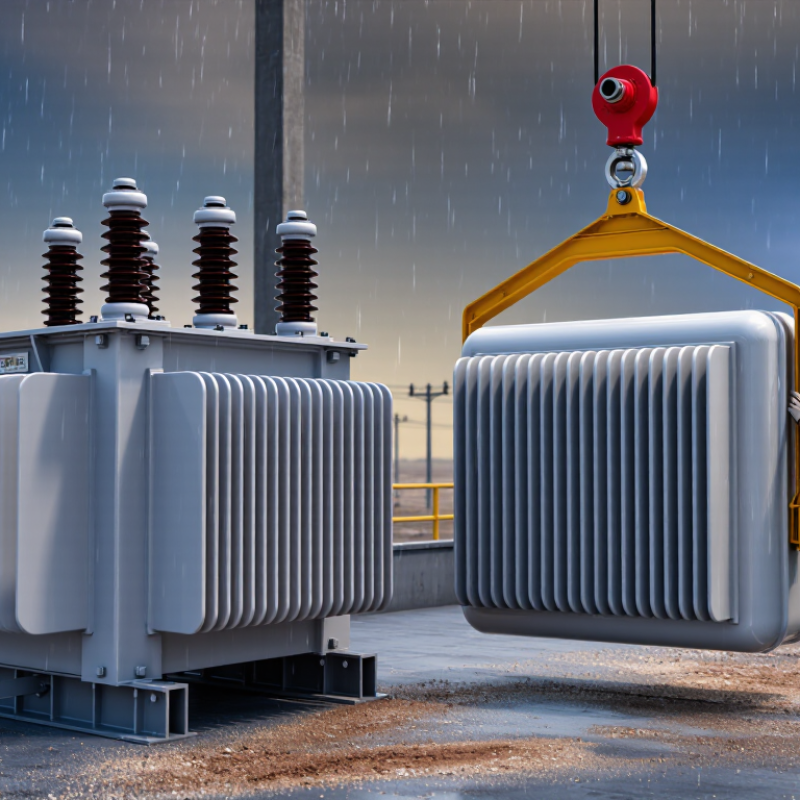
Why Choose a Polymeric Surge Arrester?
A polymeric surge arrester protects electrical equipment from sudden overvoltage caused by lightning or switching events. It is usually connected between a power conductor and ground. Under normal voltage, its zinc oxide varistor blocks significant current. During a surge, the varistor changes behavior and redirects excess energy safely toward ground.
The arrester’s polymeric housing is lightweight, impact-resistant, and electrically insulating. Its molded sheds help prevent surface flashover during rain, dust, or salt contamination. Unlike porcelain, polymer can reduce installation weight and resist shattering. In practical inspections, technicians often look for cracked sheds, loose connections, and signs of moisture entry. Small details matter.
A reliable arrester still requires correct system matching. Its rated voltage, energy capability, grounding path, and temporary overvoltage performance must suit the installation. Poor grounding can leave equipment exposed, even when the arrester appears new. No arrester is maintenance-free. That assumption needs reconsideration. Field conditions may also age polymer surfaces faster than laboratory tests suggest, especially under intense sunlight and industrial pollution. Selecting the device should involve measured network data, clear installation records, and periodic visual checks.
| Evaluation Dimension | Polymeric Surge Arrester | Conventional Porcelain-Housed Arrester | Practical Benefit |
|---|---|---|---|
| Basic definition | A metal-oxide surge arrester fitted with an external polymeric housing, commonly made from silicone rubber or a similar insulating material. | A metal-oxide surge arrester enclosed in a rigid porcelain housing. | The polymeric design combines established metal-oxide protection technology with a lightweight, non-brittle external housing. |
| Main protective element | Metal-oxide varistor blocks, typically based on zinc oxide, provide a highly nonlinear voltage-current characteristic. | The same metal-oxide varistor technology is commonly used inside the arrester. | The surge-limiting function is determined mainly by the internal metal-oxide blocks, not only by the housing material. |
| Surface hydrophobicity | Silicone-rubber housings can provide a hydrophobic surface that helps reduce continuous water-film formation and leakage-current flow under wet contamination. | Porcelain surfaces generally become more dependent on shed geometry and surface condition when wet and contaminated. | Improved surface water behavior can support reliable operation in coastal, industrial, and polluted environments when correctly specified. |
| Contamination performance | The hydrophobic surface and flexible shed profile can help limit leakage-current activity during contamination and moisture exposure. | Performance depends strongly on porcelain surface condition, contamination severity, shed design, and washing or maintenance practices. | Polymeric housings may reduce the frequency of cleaning in some environments, but site-specific pollution assessment remains necessary. |
| Mechanical impact resistance | The housing is non-brittle and generally more resistant to damage from handling, vibration, and impact than ceramic housings. | Porcelain is rigid but brittle and can crack or break if subjected to severe impact or improper handling. | Lower risk of handling-related housing damage can simplify transportation, installation, and maintenance activities. |
| Failure behavior | When designed with suitable pressure-relief and venting features, the polymeric housing can help reduce the risk of hazardous housing fragmentation during an internal failure. | A porcelain housing may shatter during a severe internal fault if pressure relief is not properly controlled. | A suitable design can improve personnel and equipment safety, although complete arrester construction and testing are critical. |
| Weight and handling | The polymeric housing and associated construction are commonly lighter than equivalent porcelain-housed designs. | The ceramic housing is comparatively heavy and may require more careful lifting and support during installation. | Lower handling effort can make installation easier, particularly on poles, compact structures, and retrofit projects. |
| Electrical insulation | The polymeric housing provides external insulation, while internal insulation and grading systems maintain the required electrical clearances. | Porcelain provides a rigid external insulating structure with established dielectric properties. | Both designs can meet required insulation levels when correctly rated for system voltage, altitude, pollution, and installation conditions. |
| Weather and ultraviolet exposure | High-quality outdoor-grade polymeric materials are formulated for resistance to moisture, ozone, ultraviolet radiation, and temperature cycling. | Porcelain is inherently resistant to ultraviolet radiation and is widely used for outdoor insulation. | Material selection, design validation, and compliance with applicable standards are essential for long-term outdoor service. |
| Maintenance requirements | The non-brittle housing and hydrophobic surface can reduce routine cleaning and handling concerns, depending on the environment. | Inspection may need greater attention to cracks, chips, contamination buildup, and surface condition. | Potentially lower maintenance effort can improve lifecycle efficiency, but inspection intervals should follow the installation risk assessment. |
| Typical applications | Overhead distribution lines, substations, transformers, cable terminations, renewable-energy installations, and compact electrical equipment. | Substations, overhead networks, and other outdoor installations where rigid ceramic insulation is suitable. | Selection should consider system voltage, temporary overvoltage, lightning exposure, switching surges, pollution, altitude, and mechanical loads. |
| Relevant standards | High-voltage surge arresters are commonly evaluated under requirements such as IEC 60099-4 or IEEE C62.11, depending on the applicable market and specification. | The same arrester standards can apply to porcelain-housed designs. | Standards-based testing helps verify insulation, residual voltage, energy capability, environmental endurance, and pressure-relief performance. |
Selection note: A polymeric surge arrester is not automatically suitable for every installation. The final choice should be based on the arrester's continuous operating voltage, rated voltage, discharge-current rating, energy capability, insulation level, pollution severity, altitude, environmental exposure, and mechanical requirements.