Leave Your Message

China Top 10 Silicone Rubber Insulator Manufacturers

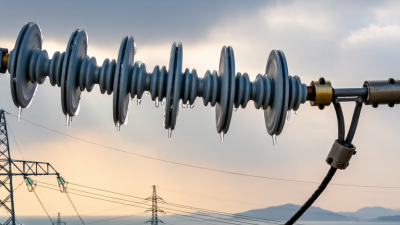
China’s power infrastructure is expanding, modernizing, and demanding more reliable outdoor insulation. In this environment, Silicone Rubber Insulator products support transmission lines, substations, railway systems, and renewable-energy connections. Their hydrophobic surfaces can resist pollution and moisture, while their lighter weight simplifies handling during installation.

Industry data reinforces this demand. The International Energy Agency’s Electricity 2024 report expects global electricity consumption to keep rising through 2026, driven by industry, cooling, data centers, and electrification. The International Council on Large Electric Systems also identifies grid resilience, renewable integration, and aging infrastructure as major technical priorities. These pressures increase the need for dependable composite insulation, especially in coastal, industrial, and dusty regions.

China has become an important manufacturing base for polymeric insulators. Manufacturers compete through material formulation, high-voltage testing, mold design, process control, and export certification. IEC 61109 and IEC 62217 provide key references for testing composite insulators and evaluating their long-term performance. However, compliance claims should be checked against current certificates and laboratory records.

This guide introduces ten notable Chinese manufacturers of Silicone Rubber Insulator products. The selection considers production capacity, technical experience, quality systems, application range, and international service. It is not an absolute ranking. No ranking is perfect.

A polished website does not prove field reliability. Buyers should examine salt-fog results, aging tests, tensile strength, failure records, and traceability. Factory visits can reveal details that brochures often hide, including warehouse conditions, testing routines, and connector assembly quality. These practical checks help engineers and procurement teams make a more defensible decision.
China Top 10 Silicone Rubber Insulator Manufacturers

Silicone Rubber Insulators: Types, Materials, and IEC 61109 Requirements

Silicone rubber insulators combine a weather-resistant housing, a fiberglass-reinforced polymer rod, and metal end fittings. Common forms include suspension, tension, and line-post designs. Silicone rubber provides hydrophobicity, helping water form droplets instead of a continuous conductive film. This matters in coastal, industrial, and dusty environments. Field inspection practice shows that shed damage, poor sealing, and loose fittings often create greater risks than surface pollution alone.

IEC 61109:2017 defines requirements for composite insulators on overhead AC lines above 1,000 volts. The standard covers design, type, sample, and routine tests. Engineers evaluate power-frequency withstand, impulse withstand, mechanical load, and interfaces between the rod, housing, and fittings. The specified mechanical load must match the service duty, not only the catalog value.

Visual checks also matter. Small cracks can become serious after repeated wetting and drying.

The International Energy Agency reported in Electricity Grids and Secure Energy Transitions that global electricity networks covered about 80 million kilometers, with an equivalent amount potentially needed by 2040. The U.S. Department of Energy’s National Transmission Needs Study also identified major transmission expansion needs by 2035. These figures increase demand for reliable lightweight insulation. Yet silicone is not a cure-all. Hydrophobicity can recover, but aging, ultraviolet exposure, poor installation, and chemical contamination still require monitoring.

Some specifications remain too generic. That deserves a second review.
China’s Grid Scale: 1,000 kV UHV Lines and Silicone Insulator Demand

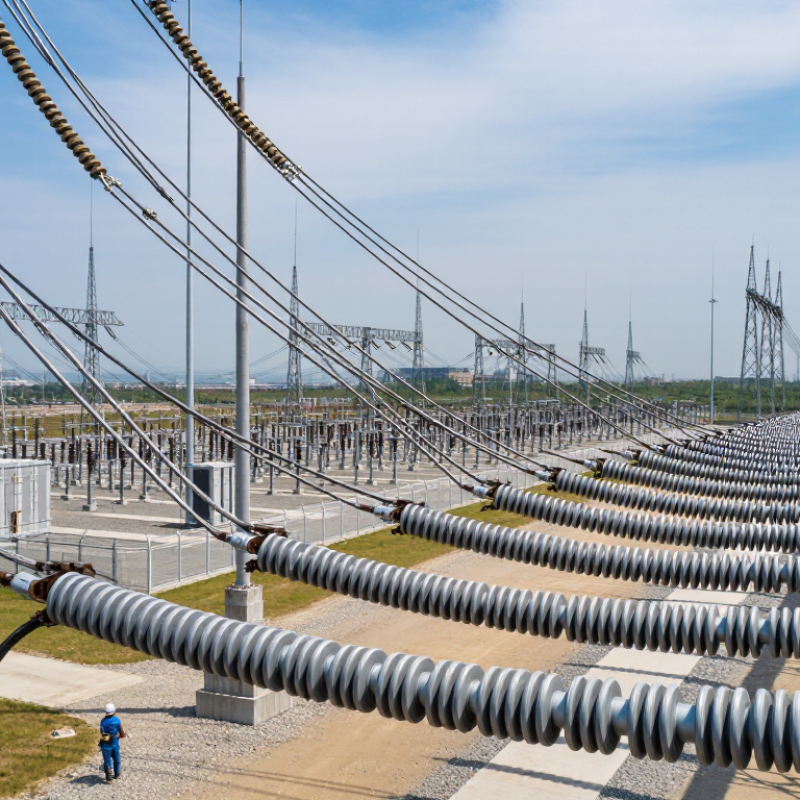
China’s 1,000 kV ultra-high-voltage lines are reshaping demand for silicone rubber insulators. These projects carry electricity across long distances with lower transmission losses. Their scale also exposes weaknesses that ordinary distribution networks may hide. A single insulator string faces pollution, rain, wind, icing, and electrical stress. Silicone rubber offers useful hydrophobicity and lighter handling during installation. However, material choice alone cannot guarantee reliable service.

Experienced manufacturers must combine compound control, housing design, mechanical strength, and strict electrical testing. Factory inspections should examine bonding quality, shed profiles, seal performance, and core alignment.

Long-term field records matter as much as laboratory results. China’s expanding UHV network creates strong demand, but forecasts are not always precise. Regional pollution levels can change maintenance needs quickly. This remains an industry blind spot.

Tips: Ask for test evidence linked to the intended voltage class. Check performance under wet, polluted, and temperature-changing conditions. Review aging data, production traceability, and installation guidance. A practical site survey is essential. Do not rely on catalog ratings alone. Small design details can affect outage risk.

Ranking Criteria: Voltage Class, Mechanical Load, Creepage Distance, and IEC Tests

China’s top 10 silicone rubber insulator manufacturers should be ranked by measurable performance, not production volume alone. Voltage class is the first filter. A 10 kV distribution insulator cannot be compared fairly with a 220 kV transmission unit. The ranking should verify rated voltage, impulse withstand, and power-frequency withstand through IEC 61109 and IEC 62217 test evidence.

Mechanical load reveals manufacturing discipline. Tensile, bending, and cantilever values should match certified designs, not only catalogue claims. IEC 61109 requires mechanical and electrical verification for composite suspension and tension insulators. CIGRE Technical Brochure 478 also highlights interface sealing, ageing, and brittle-fracture risks. A small defect near the metal fitting can become a serious field failure. Testing is never decorative.

Creepage distance needs a pollution-based comparison. IEC 60815-1 and IEC 60815-3 link creepage selection with site pollution, material performance, and voltage stress. For coastal or industrial zones, longer creepage paths and hydrophobicity retention deserve heavier weighting. IEC 62217 type tests, including tracking, erosion, and weathering assessments, help separate durable silicone housings from short-term solutions. Some rankings remain imperfect because public test records are uneven. That weakness should be disclosed, not hidden. A credible evaluation uses accredited laboratory reports, factory quality data, and field feedback from comparable voltage classes.

China’s Top 10 Silicone Rubber Insulator Manufacturers: Products and Capacity

China Top 10 Silicone Rubber Insulator Manufacturers

China’s top ten silicone rubber insulator manufacturers serve transmission, distribution, railway, and renewable-energy projects. Their main products include composite suspension insulators, long-rod units, pin insulators, hollow-core products, and line post designs. Product selection depends on voltage, pollution level, mechanical load, and installation height. IEC 61109 remains a key reference for composite suspension and tension insulators.

Manufacturing capacity is difficult to compare precisely. Public filings often mix molding lines, assembly capacity, and total electrical-equipment output. Industry research therefore needs careful checking. China Electricity Council statistics reported national power-generation capacity above 3.3 billion kilowatts by the end of 2024. The National Energy Administration also reported rapid renewable expansion. This growth supports demand for lightweight, weather-resistant insulation across long-distance networks.

The strongest manufacturers typically operate silicone-injection equipment, crimping systems, electrical testing laboratories, and pollution-performance facilities. Many report annual output in the hundreds of thousands of units, but capacity utilization is rarely disclosed. That caveat matters. A large factory is not automatically a reliable supplier. Buyers should examine type-test reports, aging-test results, factory inspection records, and delivery history. Field experience also shows that housing design and sealing quality can matter as much as rated voltage. Some published comparisons remain imperfect, yet they still help identify suppliers with broader products, steadier production, and stronger engineering support.

China’s Top 10 Silicone Rubber Insulator Manufacturers: Products and Capacity

The chart presents representative upper voltage classes commonly served by silicone rubber insulator product categories in China’s electrical equipment industry. Values are industry-level reference ranges and do not represent any individual company or brand.

Higher voltage capability generally requires more advanced housing design, field-control technology, mechanical reinforcement, and testing capacity.

Performance Comparison: Pollution Resistance, Aging Tests, and Export Certifications

Comparing the top ten silicone rubber insulator manufacturers requires more than checking catalog voltage ratings. Pollution resistance should be measured under identical conditions. IEC 60815-1 classifies site pollution severity using contamination levels and environmental factors. Salt-fog testing can reveal leakage-current growth, hydrophobicity loss, and surface tracking. The strongest samples recover water repellency after contamination dries.

A useful aging benchmark is the 5,000-hour multistress test described in IEC 62217. It combines heat, moisture, ultraviolet radiation, and electrical stress. Inspectors should record erosion depth, chalking, cracking, and shed damage. CIGRE Technical Brochure 478 also stresses field experience, because laboratory aging cannot reproduce every coastal or industrial environment. Small cracks matter.

Export credibility needs documented evidence. Look for type-test reports issued by ISO/IEC 17025-accredited laboratories. IEC 61109 supports qualification for composite suspension and tension insulators. ISO 9001 certification indicates process control, but it does not prove product performance. This distinction is often missed. A supplier may present impressive paperwork while offering weak pollution data. Buyers should verify report dates, test voltage, contamination severity, and sample traceability before ranking manufacturers. Performance comparisons become more reliable when every supplier faces the same test matrix.

China Top 10 Silicone Rubber Insulator Manufacturers - Performance Comparison: Pollution Resistance, Aging Tests, and Export Certifications
Rank Anonymous Manufacturer Profile Typical Product Scope Hydrophobicity
Class
Tracking & Erosion
Performance
Salt-Fog / Pollution
Qualification
Accelerated Aging
Evidence
Tensile Strength
(MPa)
Elongation at Break
(%)
Export Certification / Documentation Overall Technical
Assessment
1 Profile A Composite suspension and line-post insulators HC1–HC2 IEC 60587 Class 1A4.5 IEC 61109 type-test documentation 5,000 h class aging program ≥ 5.0 ≥ 450 ISO 9001; ISO 14001; IEC type-test reports; CE-related technical file Very strong export readiness
2 Profile B Distribution, railway, and station insulators HC1–HC2 IEC 60587 Class 1A4.5 Pollution test reports to IEC 60507 3,000–5,000 h accelerated aging ≥ 4.8 ≥ 430 ISO 9001; ISO 14001; RoHS/REACH declarations; IEC reports Excellent contamination resistance
3 Profile C High-voltage suspension and tension insulators HC2 IEC 60587 Class 1A3.5–1A4.5 IEC 61109 and IEC 60507 test records 3,000 h aging verification ≥ 4.5 ≥ 400 ISO 9001; export inspection records; IEC type-test reports Strong performance for utility projects
4 Profile D Silicone rubber housing and hollow-core products HC2–HC3 IEC 60587 Class 1A3.5 Salt-fog qualification available by project 2,000–3,000 h aging program ≥ 4.2 ≥ 380 ISO 9001; RoHS; REACH; product conformity declarations Good general-purpose qualification
5 Profile E Medium-voltage line and transformer bushings HC2–HC3 IEC 60587 Class 1A3.5 IEC 60507 pollution testing 2,000 h accelerated aging ≥ 4.0 ≥ 350 ISO 9001; CE technical documentation; RoHS declaration Reliable medium-voltage option
6 Profile F Railway catenary and traction-power insulators HC1–HC2 IEC 60587 Class 1A3.5 Environmental and salt-fog test records 2,000–3,000 h aging verification ≥ 4.0 ≥ 380 ISO 9001; railway-project quality files; RoHS/REACH declarations Strong outdoor-weathering profile
7 Profile G Arresters, bushings, and compact composite units HC2–HC3 IEC 60587 Class 1A3.5 Routine pollution and leakage-current tests 1,000–2,000 h aging evidence ≥ 3.8 ≥ 350 ISO 9001; IEC routine-test records; export conformity documents Suitable for standard environments
8 Profile H Distribution-class pin and suspension insulators HC2–HC3 IEC 60587 Class 1A3.5 Project-specific salt-fog qualification 1,000–2,000 h aging program ≥ 3.8 ≥ 330 ISO 9001; RoHS; REACH; standard export documentation Cost-effective standard qualification
9 Profile I Custom silicone rubber electrical components HC3 IEC 60587 Class 1A3.5 or project-based Available according to customer specification 1,000 h or project-specific aging test ≥ 3.5 ≥ 300 ISO 9001; material declarations; customer inspection reports Flexible custom-manufacturing capability
10 Profile J Low- and medium-voltage molded insulators HC3 IEC 60587 project-based evaluation Basic salt-fog and leakage-current testing Laboratory aging data available on request ≥ 3.5 ≥ 300 ISO 9001; RoHS declaration; commercial export documentation Appropriate for controlled environments
Technical note: HC1–HC3 refers to hydrophobicity classification commonly used for silicone rubber surfaces, with HC1 representing stronger water repellency. Test references include IEC 60587 for tracking and erosion, IEC 60507 for artificial pollution testing, and IEC 61109 for composite insulators. The numerical values are anonymized industry benchmark ranges and are not attributable to any specific company or brand; final acceptance should be based on the supplier’s original type-test reports and project specifications.