- Home
- About Us
- Products
- News
- Blog
- Contact Us
Leave Your Message
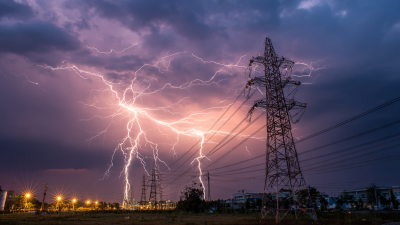
This guide examines leading Polymeric Surge Arrester manufacturers serving utilities, industrial plants, renewable projects, and transport networks worldwide. These devices protect electrical equipment from lightning impulses and switching surges. Their silicone rubber housings resist moisture, pollution, and ultraviolet exposure. Field conditions still matter.
A credible manufacturer should demonstrate practical engineering experience, controlled production, and dependable test evidence. We assess product design, voltage ratings, energy capability, sealing quality, and aging resistance. Factory testing matters. Evidence may include independent reports, routine test records, certification documents, and references from operating sites. We also consider alignment with recognized IEC and IEEE practices, while avoiding unsupported claims.
The comparison considers manufacturing capacity, technical support, delivery consistency, and regional service coverage. A coastal substation may face salt contamination and persistent humidity. A dry inland facility may experience dust, heat, and sharp temperature changes. These conditions can influence housing design and maintenance needs. Buyers should verify application data with qualified engineers.
Some public information is incomplete. That limitation matters. A polished website does not prove long-term field performance. The strongest manufacturers explain test methods, limitations, and warranty conditions clearly. They also provide installation guidance and responsive after-sales support. This approach helps readers compare suppliers more responsibly, rather than choosing only by price or brand visibility. No comparison is flawless, and product suitability should always be confirmed against the project’s electrical system, environment, and risk profile.
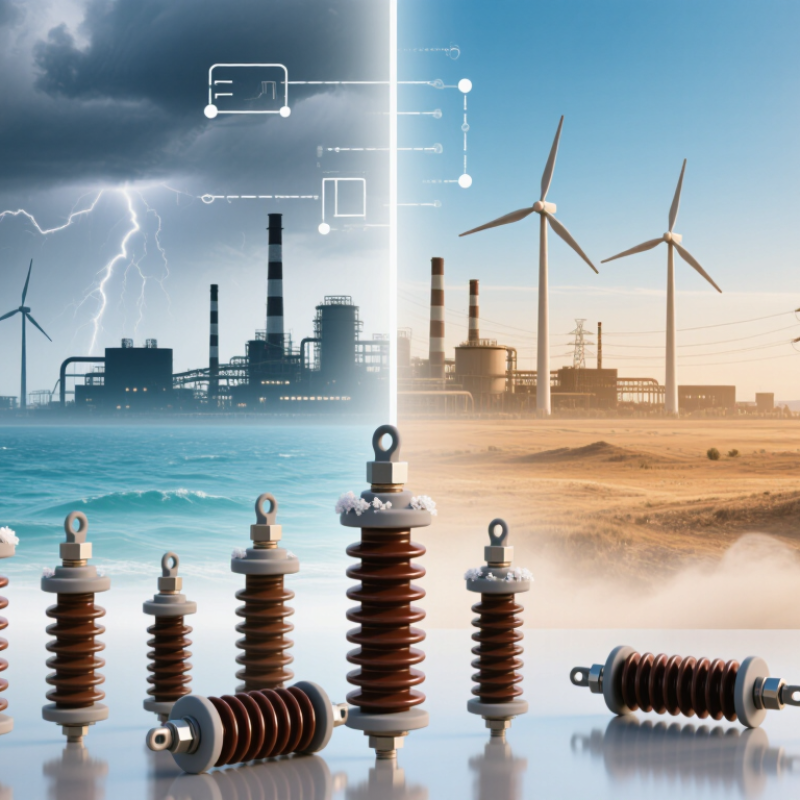
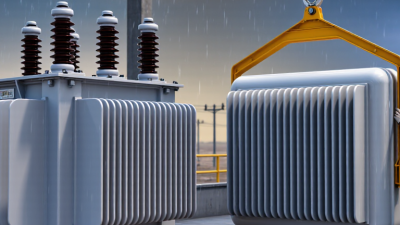
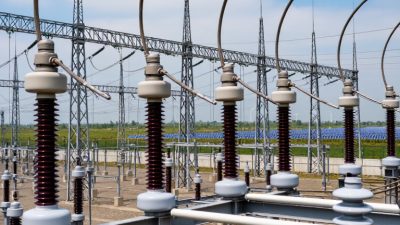
Polymeric surge arresters protect electrical equipment from sudden overvoltage. They are commonly installed near transformers, switchgear, motors, and overhead line connections. Their outer housing uses silicone rubber or another weather-resistant polymer. This material is lightweight, hydrophobic, and less likely to crack during handling than traditional porcelain.
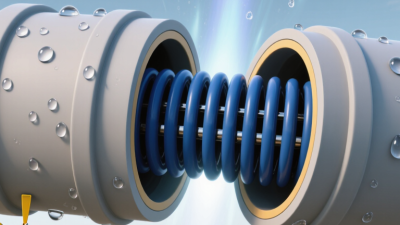
Inside, metal-oxide varistor blocks perform the main protective work. During normal voltage, they allow only a tiny leakage current. When lightning or switching creates a surge, their electrical resistance drops sharply. The arrester then diverts excess energy toward the grounding system. Voltage across the protected equipment stays within a safer range. After the surge ends, the varistors return to their high-resistance state. Simple in principle. Precise installation still matters.
Tips: Check grounding resistance, creepage distance, and connection tightness during inspection. Keep the arrester close to the equipment it protects. Look for housing cracks, discoloration, tracking marks, or moisture entry. Field experience shows that many failures begin with poor grounding, not weak arrester materials. However, no design is perfect. Local pollution, ultraviolet exposure, altitude, and repeated surges can change service life. Engineers should review system voltage, temporary overvoltage, and expected discharge current before selecting a model. Visual checks are useful, but they cannot replace properly documented electrical testing.
| Technical Dimension | Verified Industry Information | Practical Significance |
|---|---|---|
| Definition | A polymeric surge arrester is a protective device that limits transient overvoltages and diverts surge current to earth. Most modern medium-voltage units use metal-oxide varistor (MOV) technology. | It protects transformers, cables, switchgear, motors, generators, and other insulation systems from lightning and switching surges. |
| Core Varistor Material | Zinc oxide (ZnO) ceramic blocks are the most widely used MOV material in high-voltage surge arresters. | ZnO blocks have a highly nonlinear current-voltage characteristic, allowing low leakage during normal operation and strong conduction during a surge. |
| Housing Material | The external housing is commonly made from silicone rubber or another weather-resistant polymeric material, reinforced where required by fiberglass or other structural components. | Polymeric housings provide low weight, good pollution performance, and resistance to shattering compared with traditional porcelain housings. |
| Operating Principle | Under normal system voltage, the MOV blocks carry only a small leakage current. When a surge raises the voltage, the MOV resistance falls sharply and the arrester conducts the surge current to ground. | The protected equipment experiences a lower residual voltage, often called the protective or discharge voltage level. |
| Series Gap | Most distribution-class polymeric MOV arresters are gapless designs. The MOV blocks are connected directly between the line terminal and earth terminal. | Gapless construction provides fast response and avoids the repeated gap restrikes associated with some gapped designs. |
| Relevant Product Standard | IEC 60099-4 covers metal-oxide surge arresters without gaps for alternating-current systems. IEEE C62.11 covers metal-oxide surge arresters for AC power circuits. | These standards define performance, testing, classification, and verification requirements for applicable arrester designs. |
| Nominal System Frequency | Power-system surge arresters are generally designed for AC networks operating at standard utility frequencies, commonly 50 Hz or 60 Hz. | The arrester must be selected for the actual network frequency and continuous operating voltage. |
| Continuous Operating Voltage (Uc or MCOV) | Uc, also called MCOV in IEEE terminology, is the highest power-frequency voltage that may be continuously applied across the arrester under specified conditions. | Uc must be coordinated with the system grounding method, maximum operating voltage, and temporary overvoltage conditions. |
| Rated Voltage (Ur) | Ur is the arrester rating associated with its ability to withstand specified temporary overvoltage and operating-duty requirements. It is not simply the same value as nominal system voltage. | Using only the network’s nominal voltage can result in incorrect arrester selection; Uc and Ur must both be checked. |
| Lightning Current Test Wave | The standard lightning impulse current waveform is commonly represented as 8/20 microseconds, meaning approximately 8 microseconds to peak and 20 microseconds to half-value on the decay. | This waveform is used to compare discharge-current capability and residual-voltage performance. |
| High-Current Capability Test | A 4/10 microsecond high-current impulse is used in relevant arrester testing to evaluate the ability to withstand severe short-duration current impulses. | It provides information about the arrester’s robustness under high-amplitude surge events. |
| Switching Impulse | Switching surges have longer duration and lower frequency content than lightning impulses. High-voltage arrester testing may use switching impulse current or voltage waveforms in accordance with the applicable standard and arrester class. | Switching-surge capability is particularly important on transmission and subtransmission networks. |
| Residual Voltage | Residual voltage is the voltage measured across the arrester while it conducts a specified surge current. | A lower residual voltage generally provides a wider insulation-protection margin, provided the arrester can withstand the network’s temporary overvoltages. |
| Nominal Discharge Current | Nominal discharge current is commonly specified using an 8/20 microsecond waveform. Distribution arresters are frequently specified in the 5 kA or 10 kA range, depending on the application and standard classification. | The selected value should reflect lightning exposure, system configuration, grounding, and the required protection level rather than being chosen by current rating alone. |
| Energy Capability | Energy withstand depends on the MOV block design, thermal stability, arrester class, current waveform, duration, and manufacturer’s tested construction. It is not represented by one universal value for all polymeric arresters. | Energy capability must be checked against expected switching surges, temporary overvoltages, and system fault conditions. |
| Thermal Stability | A correctly designed MOV arrester must dissipate heat generated by leakage current and remain thermally stable under specified operating conditions. | Thermal stability helps prevent progressive heating and failure following a surge or temporary overvoltage event. |
| Pollution Performance | Silicone-rubber housings are widely used because their hydrophobic surface can reduce the formation of a continuous conductive water film under wet and polluted conditions. | Housing material, creepage distance, pollution severity, and installation environment must be evaluated together. |
| Creepage Distance | Creepage distance is the shortest surface path between conductive parts at different potentials. Required distance depends on insulation coordination, system voltage, and environmental pollution level. | Adequate creepage helps reduce surface leakage and flashover risk in coastal, industrial, or heavily polluted locations. |
| Mechanical Design | Polymeric arresters commonly use a sealed MOV column with an external polymeric housing and line and earth terminals. The internal construction may include fiberglass reinforcement and pressure-relief features. | The design must withstand electrical, mechanical, thermal, and environmental stresses throughout the intended service life. |
| Failure Protection | Many distribution arresters incorporate a pressure-relief or disconnecting arrangement intended to separate a failed arrester from the system and reduce the risk of sustained internal fault damage. | The exact behavior depends on the product design, fault current, installation, and applicable test requirements. |
| Typical Applications | Common applications include overhead distribution lines, transformer terminals, substations, cable terminations, renewable-energy collection systems, industrial power networks, and railway electrification systems. | Application-specific coordination is required because the surge environment and insulation level vary between installations. |
| Installation Lead Length | The line and earth connections should be kept as short and straight as practical. Lead inductance can add voltage during a fast surge current. | Good installation practice can materially improve the protection level at the equipment terminals, even when the arrester’s catalog ratings are unchanged. |
| Insulation Coordination | Arrester selection should be coordinated with the equipment’s basic insulation level (BIL) or lightning impulse withstand level, system grounding, expected surge current, and arrester protective characteristics. | Protection is effective only when the arrester’s residual voltage remains below the withstand capability of the protected insulation with an appropriate margin. |
| Environmental Service Conditions | Important conditions include altitude, ambient temperature, ultraviolet exposure, humidity, salt contamination, industrial pollution, wind, ice, and mechanical loading. | These factors influence housing selection, creepage distance, mechanical strength, and long-term reliability. |
| Main Selection Data | Key selection data include maximum system voltage, grounding method, frequency, Uc/MCOV, Ur, nominal discharge current, short-circuit capability, insulation level, pollution severity, creepage distance, and mounting configuration. | A complete specification prevents mismatches between the arrester, the power system, and the equipment being protected. |
| Service-Life Considerations | Service life is affected by repeated surges, temporary overvoltages, moisture ingress, contamination, ultraviolet exposure, thermal cycling, and mechanical stress. | Periodic inspection should look for damaged housing, tracking, contamination, loose connections, disconnected units, and signs of thermal or electrical distress. |